Deaminase Enzyme for Cheese: Protein Deaminase Dosage, pH, and Temperature
Troubleshoot deaminase enzyme for cheese: dosage, pH, temperature, QC checks, pilot validation, COA/TDS/SDS, and supplier selection.
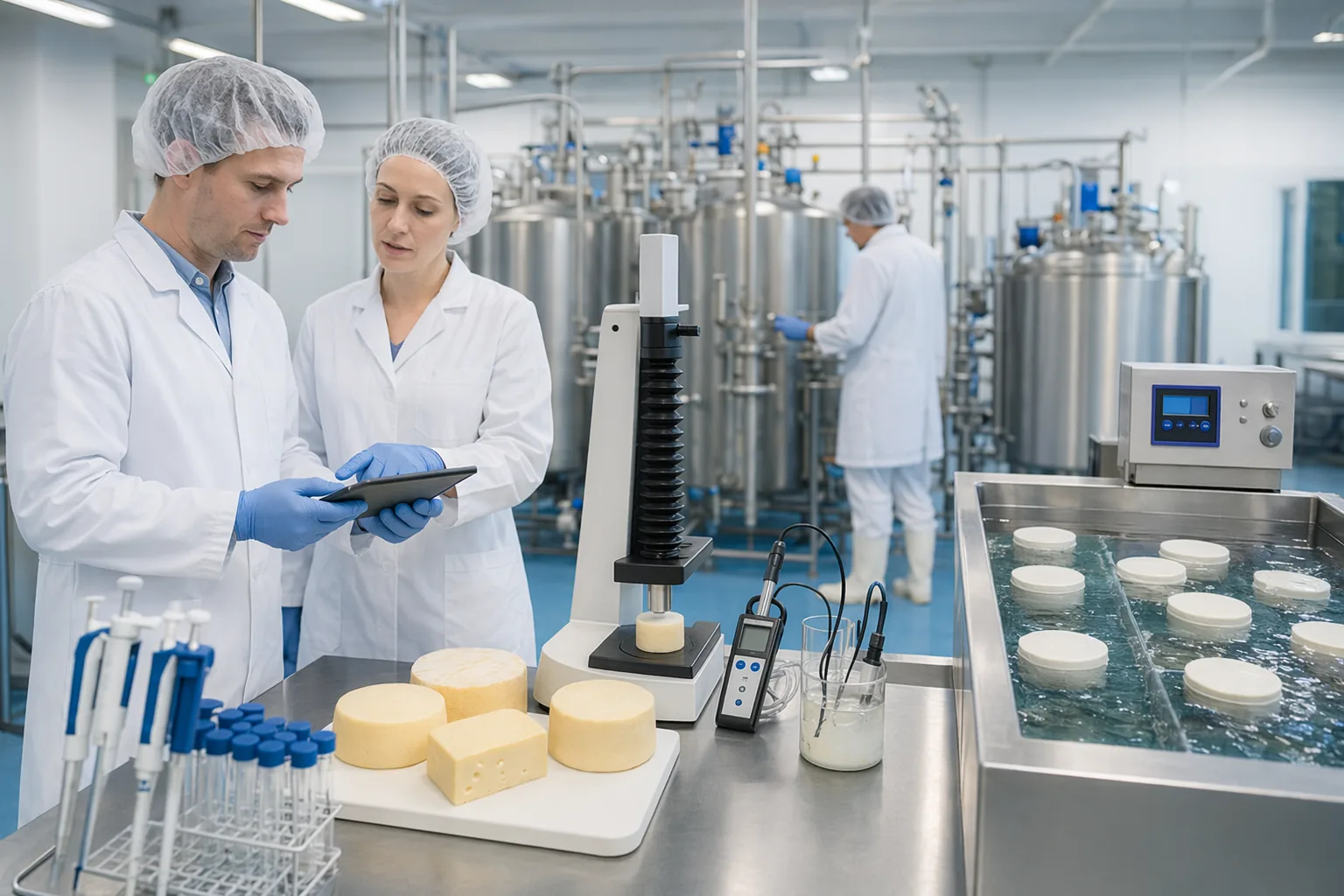
A practical B2B guide for cheese processors evaluating protein deaminase to improve protein functionality, texture control, and process consistency.
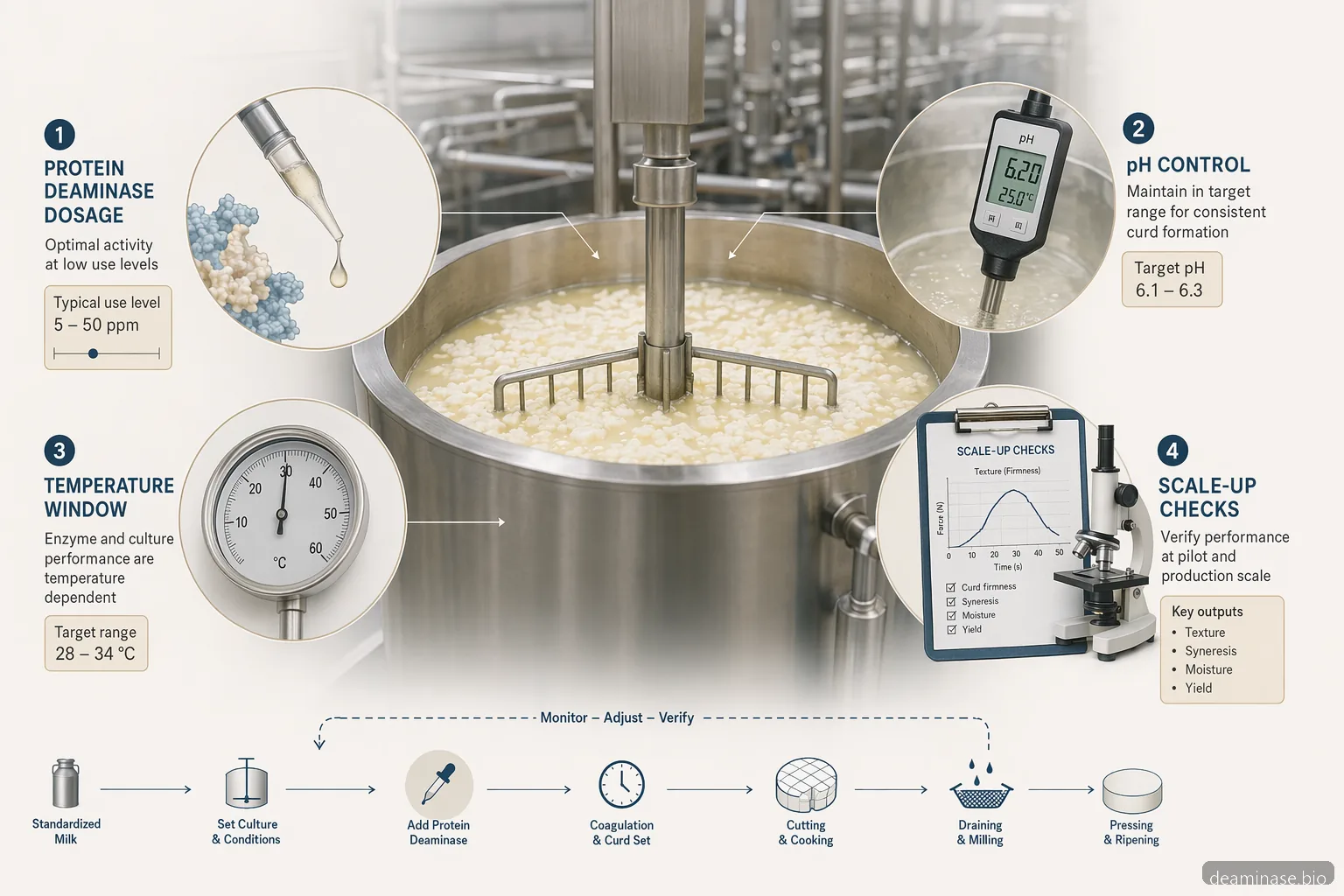
Why Cheese Plants Evaluate Protein Deaminase
Protein deaminase, often described commercially as protein glutaminase, modifies glutamine residues in food proteins and converts them to glutamic acid residues. In cheese systems, this can change protein charge, hydration, emulsification behavior, and interaction with calcium. For processors troubleshooting inconsistent melt, brittle texture, weak protein functionality, or plant-protein-containing cheese analogues, deaminase enzyme for cheese may be worth evaluating in a controlled pilot. It is not a universal fix for poor milk quality, incorrect pH, inadequate calcium balance, or sanitation issues. The strongest business case is usually found where protein functionality limits yield, sliceability, spreadability, melt, or moisture control. Industrial buyers should request clear application guidance because dosage depends on protein source, enzyme activity unit, contact time, pH, temperature, and whether the enzyme is applied to milk, cream, retentate, cheese blend, or plant-protein base.
Relevant for dairy cheese, processed cheese, cheese analogues, and hybrid dairy-plant systems. • Best evaluated against a defined defect such as poor melt, weak emulsification, or texture variation. • Pilot validation is essential before production dosing.
Starting Dosage Range and Trial Design
A practical first screen for industrial deaminase enzyme cheese trials is to dose by enzyme activity per gram of protein, not simply by product weight. Because commercial activity definitions vary, the supplier’s TDS should define the unit assay and recommended dosage. For early lab work, many processors compare a blank control with low, medium, and high enzyme treatments, then adjust within the supplier’s stated band. A reasonable pilot design may include 5–25 U/g protein for conservative testing, 25–75 U/g protein for functional screening, and higher levels only if the supplier supports them and sensory impact remains acceptable. Over-treatment can reduce curd firmness, alter rennet behavior, increase bitterness or savory notes, or shift moisture binding beyond the target specification. Always hold milk composition, heat history, starter culture, pH schedule, salt, and calcium addition constant during comparison trials.
Dose by enzyme activity per gram of protein. • Run untreated and heat-inactivated controls. • Record contact time, pH, temperature, and protein concentration. • Do not scale directly from lab to plant without pilot confirmation.
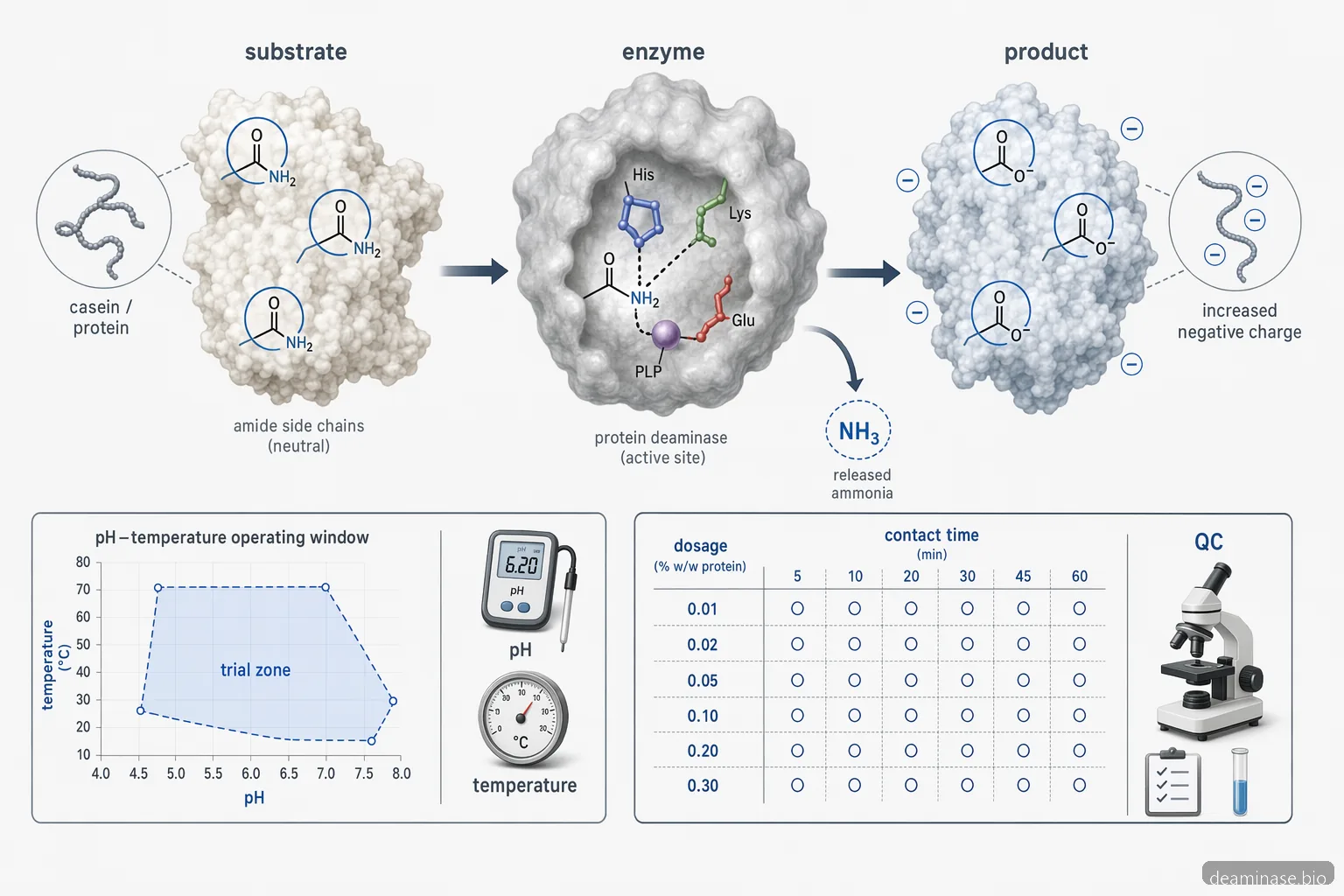
pH, Temperature, and Contact Time Controls
Protein deaminase performance depends strongly on pH and temperature. For cheese applications, useful screening conditions are often near pH 5.5–7.0 and 35–55°C, but the exact operating window must come from the supplier’s TDS and pilot data. In milk or retentate systems, treating before acidification may improve enzyme access but can also influence coagulation. In processed cheese or analogue blends, treatment may be easier to control if the protein slurry is adjusted before emulsifying salts, fat addition, or final cooking. Contact time commonly ranges from 15 minutes to several hours, depending on activity, substrate, and target modification. Heat steps used for pasteurization, cooking, or processed cheese manufacture may reduce enzyme activity, but processors should verify inactivation rather than assume it. If residual activity matters for shelf life, include storage testing and finished-product QC.
Screen pH 5.5–7.0 before narrowing the operating setpoint. • Screen 35–55°C unless the supplier specifies otherwise. • Confirm whether downstream heat fully inactivates the enzyme. • Monitor pH drift and viscosity during treatment.
Troubleshooting Common Cheese Defects
When using protein deaminase for cheese, the troubleshooting question should be specific: what defect must change, and what cannot change? For poor melt in processed cheese, evaluate melt diameter, oiling-off, viscosity, and slice integrity. For weak texture, measure curd firmness, moisture, protein recovery, and fracture force. For plant-protein cheese analogues, check solubility, grittiness, emulsification, and heat stability because deamination may improve hydration but can also expose flavor limitations in the protein raw material. If coagulation slows or curd fines increase, reduce enzyme dose, shorten contact time, shift treatment after partial protein structuring, or review calcium and pH. If flavor becomes too savory, bitter, or atypical, compare lower conversion targets and verify the enzyme preparation does not introduce side activities that affect peptides, fat, or lactose.
For melt defects: test melt, viscosity, oiling-off, and stretch. • For yield defects: test moisture, fines, whey protein loss, and curd firmness. • For analogue cheese: test hydration, emulsification, grittiness, and flavor. • For process drift: verify enzyme activity, pH meter calibration, and hold temperature.
QC Checks Before Plant Scale-Up
A qualified industrial protein deaminase cheese trial should include analytical, sensory, and processing checks. At minimum, document incoming protein composition, enzyme lot number, dosage calculation, pH, temperature, time, and heat treatment. Analytical QC may include degree of deamidation where available, free ammonia, soluble nitrogen, moisture, fat, salt, pH, water activity, viscosity, melt test, texture profile analysis, and microbiological results appropriate to the plant’s food safety plan. Sensory evaluation should cover dairy character, bitterness, savory intensity, mouthfeel, and any off-notes. For shelf-life validation, compare control and treated cheese under intended packaging and storage conditions. Cost-in-use should be calculated per metric ton of finished cheese and linked to measurable benefits such as reduced rework, improved yield, better texture consistency, or lower formulation cost.
Track enzyme lot and activity for every trial. • Use analytical and sensory acceptance criteria. • Run shelf-life checks before commercial release. • Convert dosage into cost per metric ton of finished product.
How to Select a Deaminase Enzyme Supplier
A deaminase enzyme supplier for cheese should support industrial validation, not only provide a sample. Request a current COA for the lot, a TDS with activity definition and application conditions, and an SDS for safe handling. Ask whether the product is positioned as protein deaminase or protein glutaminase, what substrate was used in the activity assay, and how activity varies with pH, temperature, salt, and heat exposure. For supplier qualification, review food-use suitability for the target market, allergen and carrier information, microbiological specifications, heavy metal limits where applicable, packaging, shelf life, storage conditions, and batch-to-batch activity tolerance. A strong protein deaminase supplier for cheese should also help design pilot trials, interpret functional data, and provide scale-up guidance for dairy, plant protein, noodles, or hybrid applications when relevant.
Request COA, TDS, SDS, allergen statement, and storage guidance. • Confirm the activity assay and dosage basis. • Ask for pilot support and batch consistency data. • Evaluate cost-in-use, not only price per kilogram.
Technical Buying Checklist
Buyer Questions
In cheese systems, protein deaminase modifies glutamine residues in proteins to glutamic acid residues. This can alter protein charge, hydration, emulsification, and calcium interaction. The result may affect melt, texture, moisture binding, and process consistency. Performance depends on the cheese type, protein source, pH, temperature, contact time, and enzyme dosage, so processors should validate effects in controlled pilot trials.
Start with the supplier’s activity-based recommendation, expressed per gram of protein when possible. For screening, processors often compare a blank control with low, medium, and high treatments such as 5–25 U/g protein, 25–75 U/g protein, and a higher supplier-approved level. Because activity units vary between suppliers, never convert dosage by weight alone without reviewing the TDS and assay definition.
Yes, it can if the treatment changes casein charge, calcium interaction, or protein hydration before renneting. Possible effects include slower coagulation, softer curd, or more fines. If this occurs, reduce dosage, shorten contact time, treat a different protein stream, adjust calcium and pH, or move the enzyme step after the most sensitive coagulation stage. Pilot trials should measure curd firmness and whey losses.
A qualified supplier should provide a COA for the delivered lot, a TDS with activity definition and operating conditions, and an SDS for handling. Buyers should also request allergen and carrier information, food-use suitability for the target market, microbiological specifications, storage conditions, shelf life, packaging details, and batch-to-batch activity tolerance. These documents support supplier qualification and production traceability.
No. While this page focuses on deaminase enzyme for cheese, similar protein modification principles may apply to industrial deaminase enzyme dairy, industrial deaminase enzyme plant protein, and industrial deaminase enzyme noodles applications. In plant-protein cheese analogues, the enzyme may help hydration or emulsification, but flavor, grittiness, and heat stability must be checked carefully because plant proteins vary widely.
Protein-Glutaminase (Protein Deaminase) for Research & Industry
Need Protein-Glutaminase (Protein Deaminase) for your lab or production process?
ISO 9001 certified · Food-grade & research-grade · Ships to 80+ countries
Frequently Asked Questions
What does deaminase enzyme do in cheese processing?
In cheese systems, protein deaminase modifies glutamine residues in proteins to glutamic acid residues. This can alter protein charge, hydration, emulsification, and calcium interaction. The result may affect melt, texture, moisture binding, and process consistency. Performance depends on the cheese type, protein source, pH, temperature, contact time, and enzyme dosage, so processors should validate effects in controlled pilot trials.
What dosage should we start with for deaminase enzyme for cheese?
Start with the supplier’s activity-based recommendation, expressed per gram of protein when possible. For screening, processors often compare a blank control with low, medium, and high treatments such as 5–25 U/g protein, 25–75 U/g protein, and a higher supplier-approved level. Because activity units vary between suppliers, never convert dosage by weight alone without reviewing the TDS and assay definition.
Can protein deaminase interfere with rennet coagulation?
Yes, it can if the treatment changes casein charge, calcium interaction, or protein hydration before renneting. Possible effects include slower coagulation, softer curd, or more fines. If this occurs, reduce dosage, shorten contact time, treat a different protein stream, adjust calcium and pH, or move the enzyme step after the most sensitive coagulation stage. Pilot trials should measure curd firmness and whey losses.
What documents should an industrial deaminase enzyme supplier provide?
A qualified supplier should provide a COA for the delivered lot, a TDS with activity definition and operating conditions, and an SDS for handling. Buyers should also request allergen and carrier information, food-use suitability for the target market, microbiological specifications, storage conditions, shelf life, packaging details, and batch-to-batch activity tolerance. These documents support supplier qualification and production traceability.
Is deaminase enzyme only useful for dairy cheese?
No. While this page focuses on deaminase enzyme for cheese, similar protein modification principles may apply to industrial deaminase enzyme dairy, industrial deaminase enzyme plant protein, and industrial deaminase enzyme noodles applications. In plant-protein cheese analogues, the enzyme may help hydration or emulsification, but flavor, grittiness, and heat stability must be checked carefully because plant proteins vary widely.
Ready to source?
Turn This Guide Into a Supplier Brief Request a technical consultation and pilot sample for industrial protein deaminase cheese trials.
Contact Us to Contribute