Industrial Protein Deaminase Dairy: Dosage, pH, and Temperature Troubleshooting
Troubleshoot industrial protein deaminase dairy use: dosage, pH, temperature, QC checks, COA/TDS/SDS review, pilot validation, and suppliers.
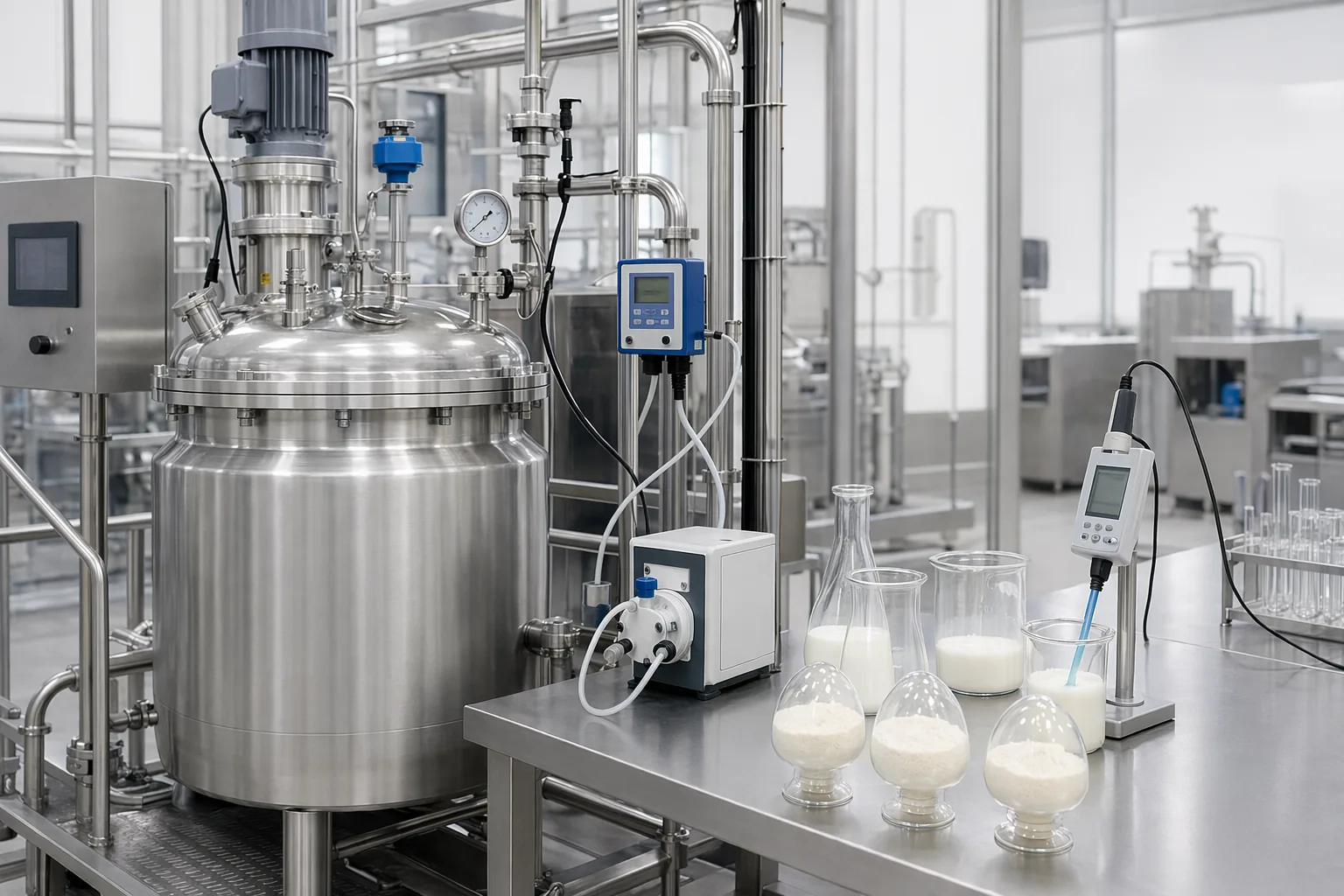
A practical B2B guide for dairy processors evaluating protein deaminase or protein glutaminase for functional protein modification, process stability, and cost-in-use control.
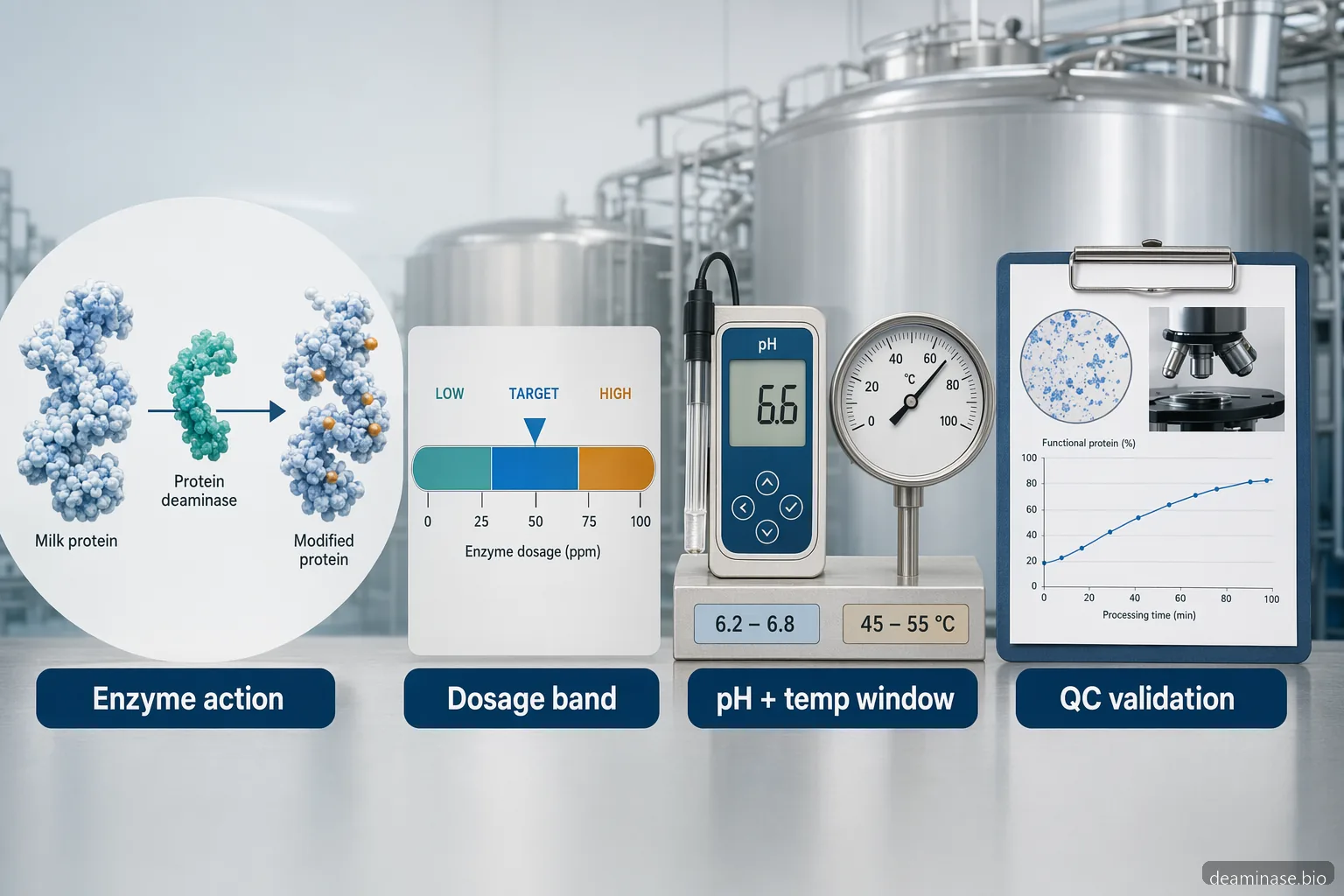
What protein deaminase does in dairy systems
Industrial protein deaminase dairy applications typically use protein glutaminase activity to convert glutamine residues in milk proteins into glutamic acid residues, releasing ammonia as a reaction by-product. This shifts protein charge and can modify hydration, solubility, emulsification, and heat behavior without requiring broad proteolysis. In dairy, the target is usually functional improvement in milk protein concentrate, whey-containing blends, processed cheese systems, cultured bases, high-protein beverages, or recombined dairy formulations. The enzyme is not a flavor shortcut and should not be treated like a generic deaminase enzyme. Results depend on substrate composition, protein denaturation history, mineral balance, fat level, pH, and heat treatment. For buyers searching for protein deaminase for dairy, the most important early question is whether the enzyme specification, food-use status, and activity method match the intended dairy process and regional regulatory requirements.
Best fit: controlled food protein modification where solubility or emulsification is limiting. • Poor fit: processes where uncontrolled viscosity increase or excess ammonia is unacceptable. • Always compare against an untreated control and, if relevant, a protease control.
Starting dosage bands and how to avoid under- or over-treatment
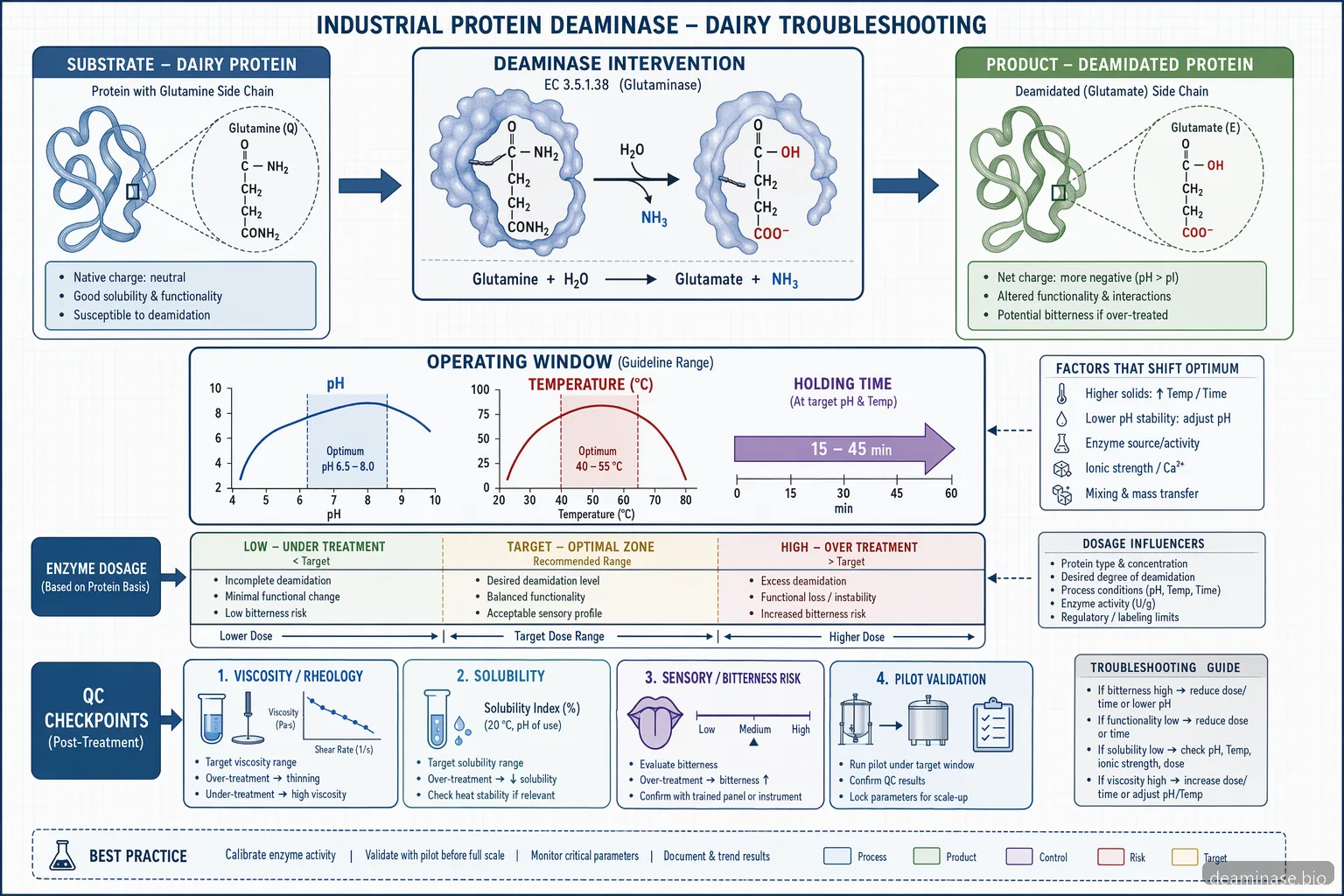
A practical screening range for industrial protein glutaminase dairy trials is often 50 to 500 U per gram of protein, or approximately 0.02% to 0.30% enzyme preparation on protein weight, depending on the supplier activity definition. Some concentrated protein systems may require lower or higher levels, so the TDS should define the activity assay, recommended dosing basis, and expected reaction time. Do not transfer dosage from plant protein, noodles, or cheese directly into fluid dairy without recalculation. Under-treatment may show little change in solubility, foaming, or heat stability. Over-treatment may create excess viscosity shift, altered mineral interactions, unexpected flavor notes, or poor cost-in-use. Build a dose-response curve with at least three enzyme levels plus a zero-enzyme control, then select the lowest dose that reaches the defined functional target.
Dose on grams of protein or enzyme units, not only liters of mix. • Run duplicate trials when protein source variability is high. • Record enzyme lot, activity, hydration method, addition point, and hold time.
pH, temperature, and holding time troubleshooting
Most industrial deaminase enzyme dairy processes should begin near neutral dairy conditions, commonly pH 5.5 to 7.2, unless the supplier TDS supports a wider range. Trial temperatures often start at 35 to 55°C, selected to balance enzyme rate with dairy protein stability and microbial controls. Holding time may range from 30 minutes to several hours, but the correct endpoint is functional performance, not time alone. If no effect is observed, confirm enzyme dispersion, actual product temperature, pH at reaction temperature, and whether upstream heat treatment reduced substrate accessibility. If texture becomes too heavy, reduce dosage, shorten hold time, or shift addition later. Enzyme inactivation is usually achieved by validated heat treatment compatible with the product, such as pasteurization or process cheese cooking, but each matrix requires confirmation.
Measure pH at process temperature when possible. • Avoid adding enzyme into zones with poor mixing or hot-wall exposure. • Validate heat inactivation with the supplier method or an agreed activity assay.
QC checks for dairy pilot validation
For troubleshooting, define pass-fail criteria before ordering scale-up material. Useful QC checks include pH drift, viscosity profile, solubility index, turbidity, particle size, heat stability, emulsion stability, melt behavior for industrial protein deaminase cheese applications, and sensory screening for bitterness, cooked notes, or ammonia perception. Chemical monitoring may include degree of deamidation, free ammonia, non-protein nitrogen, and protein integrity if the supplier method is available. In high-protein dairy beverages, watch sediment, age gelation, and UHT or retort tolerance. In cheese or cheese sauce, check melt, stretch, oiling-off, firmness, and sliceability. The goal is not maximum reaction; it is a reproducible functional window. Keep a pilot batch record with raw material protein content, mineral profile, solids, pH adjustment, enzyme addition point, thermal history, and analytical results.
Use the same milk protein source planned for commercial production. • Track cost-in-use beside functionality, not after the trial is complete. • Retain samples for accelerated and real-time stability comparison.
Supplier qualification and scale-up risk control
A qualified protein deaminase supplier for dairy should provide a current COA for each lot, a TDS with activity definition and process guidance, and an SDS for safe handling. Buyers should also request information on carrier composition, allergen status, residual activities, storage conditions, shelf life, food-use suitability, country-specific regulatory support, traceability, and lot-to-lot activity tolerance. Avoid relying on unverifiable claims or generic enzyme descriptions; protein deaminase and other deaminase enzyme products can differ significantly in substrate specificity and side activities. Before issuing a production purchase order, run pilot validation at the intended solids level, then conduct a plant trial using normal mixing, heating, and hold equipment. Final supplier selection should compare delivered activity, technical support, documentation quality, lead time, and cost-in-use per ton of finished dairy product.
Request COA, TDS, SDS, specification sheet, and recommended storage conditions. • Confirm regulatory suitability for the market where the finished food is sold. • Assess technical response quality during pilot troubleshooting.
Technical Buying Checklist
Buyer Questions
In food protein modification, the term protein deaminase is often used commercially for protein glutaminase activity, which deamidates glutamine residues in proteins. Buyers should verify the exact enzyme activity, assay method, and substrate specificity on the TDS. Do not assume equivalence with other deaminase enzymes, because different enzyme classes can target different substrates and may not be suitable for dairy.
A reasonable first screen is 50 to 500 U per gram of protein, or about 0.02% to 0.30% enzyme preparation on protein weight, depending on the supplier activity definition. Run at least three dose levels plus an untreated control. The best dosage is the lowest level that meets defined QC targets for solubility, viscosity, heat stability, texture, or emulsion performance.
Common causes include low enzyme activity, incorrect dosage basis, pH outside the effective range, insufficient holding time, poor mixing, or substrate proteins that are already heavily heat-denatured or mineral-bound. Check actual tank temperature, pH at reaction conditions, protein content, and enzyme storage history. A supplier-supported pilot trial can help separate enzyme performance issues from formulation and processing limitations.
Compare suppliers on delivered enzyme activity, documentation quality, lot consistency, regulatory support, technical troubleshooting, and cost-in-use per ton of finished product. Request COA, TDS, SDS, activity method, allergen and carrier information, storage requirements, and shelf-life data. A strong supplier should support pilot validation and help interpret process variables without making unverifiable performance claims.
Not without separate validation. Industrial protein deaminase cheese, industrial protein deaminase plant protein, and industrial protein deaminase noodles applications differ in protein substrate, water activity, pH, heat history, and target functionality. A dosage that works in dairy may underperform or overreact in another matrix. Treat each application as a separate pilot project with its own QC criteria.
Protein-Glutaminase (Protein Deaminase) for Research & Industry
Need Protein-Glutaminase (Protein Deaminase) for your lab or production process?
ISO 9001 certified · Food-grade & research-grade · Ships to 80+ countries
Frequently Asked Questions
Is protein deaminase the same as protein glutaminase in dairy processing?
In food protein modification, the term protein deaminase is often used commercially for protein glutaminase activity, which deamidates glutamine residues in proteins. Buyers should verify the exact enzyme activity, assay method, and substrate specificity on the TDS. Do not assume equivalence with other deaminase enzymes, because different enzyme classes can target different substrates and may not be suitable for dairy.
What dosage should I test first for industrial protein deaminase dairy trials?
A reasonable first screen is 50 to 500 U per gram of protein, or about 0.02% to 0.30% enzyme preparation on protein weight, depending on the supplier activity definition. Run at least three dose levels plus an untreated control. The best dosage is the lowest level that meets defined QC targets for solubility, viscosity, heat stability, texture, or emulsion performance.
Why did protein deaminase not improve my dairy protein solubility?
Common causes include low enzyme activity, incorrect dosage basis, pH outside the effective range, insufficient holding time, poor mixing, or substrate proteins that are already heavily heat-denatured or mineral-bound. Check actual tank temperature, pH at reaction conditions, protein content, and enzyme storage history. A supplier-supported pilot trial can help separate enzyme performance issues from formulation and processing limitations.
How should we compare suppliers for industrial deaminase enzyme dairy use?
Compare suppliers on delivered enzyme activity, documentation quality, lot consistency, regulatory support, technical troubleshooting, and cost-in-use per ton of finished product. Request COA, TDS, SDS, activity method, allergen and carrier information, storage requirements, and shelf-life data. A strong supplier should support pilot validation and help interpret process variables without making unverifiable performance claims.
Can the same enzyme program be used for cheese, plant protein, and noodles?
Not without separate validation. Industrial protein deaminase cheese, industrial protein deaminase plant protein, and industrial protein deaminase noodles applications differ in protein substrate, water activity, pH, heat history, and target functionality. A dosage that works in dairy may underperform or overreact in another matrix. Treat each application as a separate pilot project with its own QC criteria.
Related: Protein Deamination for Better Food Functionality
Turn This Guide Into a Supplier Brief Request a dairy pilot protocol, COA/TDS/SDS review, and cost-in-use estimate for your protein deaminase process. See our application page for Protein Deamination for Better Food Functionality at /applications/protein-deamination-applications/ for specs, MOQ, and a free 50 g sample.
Contact Us to Contribute