Protein Deaminase Supplier Guide for Cheese
Source protein deaminase for cheese with practical dosage, pH, temperature, QC, COA/TDS/SDS, pilot validation, and cost-in-use guidance.
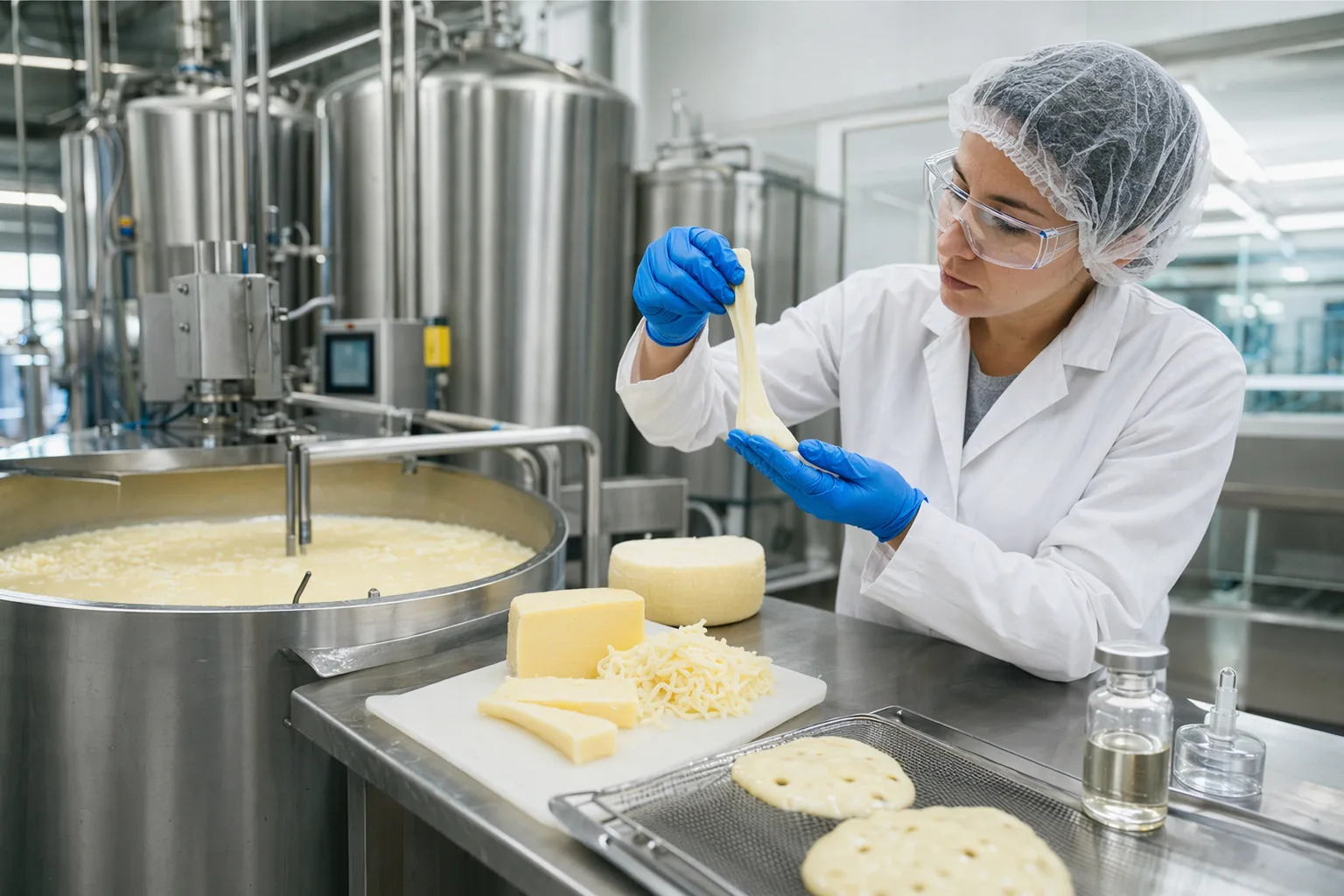
For cheese manufacturers comparing a deaminase enzyme supplier for cheese, this guide outlines practical sourcing, trials, specifications, and qualification points for industrial protein modification.
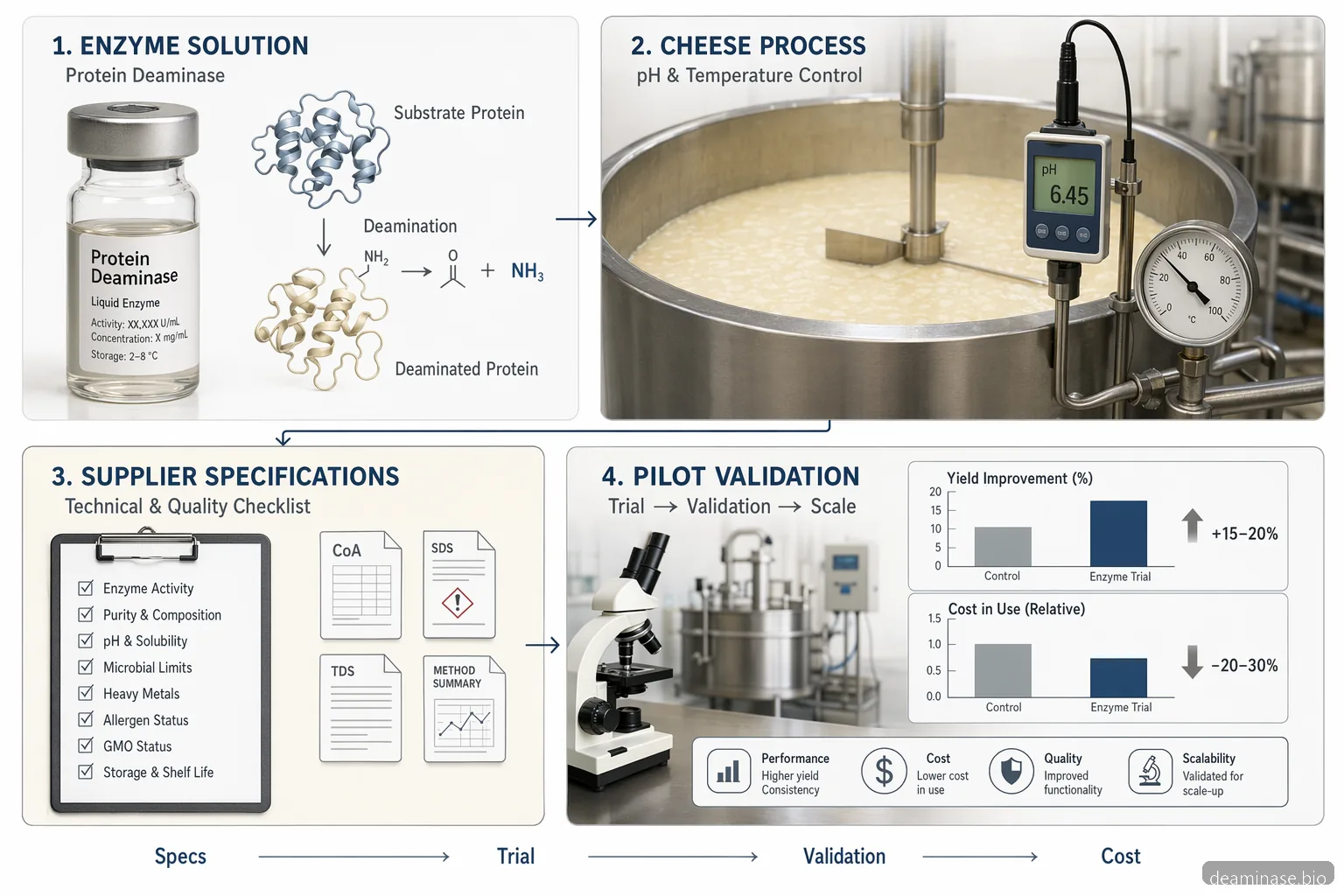
Why cheese buyers evaluate protein deaminase
A protein deaminase supplier for cheese should understand that dairy processors are not buying a generic enzyme; they are buying a controlled protein modification tool. Protein deaminase, often described as protein glutaminase in food applications, can increase negative charge on proteins by deamidating glutamine residues. In cheese systems, this may influence hydration, dispersion, emulsification, texture, melt, and interactions with salts and starter cultures. The value depends strongly on milk composition, protein source, cheese type, heat history, and make procedure. For that reason, an industrial deaminase enzyme cheese project should begin with a defined technical objective, such as improving processed cheese emulsification, modifying milk protein concentrate before blending, or adjusting plant-dairy hybrid cheese texture. A qualified supplier should help translate those objectives into a pilot protocol rather than promising universal performance.
Best fit: industrial cheese, dairy ingredient, and processed cheese development • Common evaluation targets: texture, melt, protein hydration, and yield • Not a medical, dietary supplement, or therapeutic enzyme application
Typical process conditions for cheese trials
Process conditions must be matched to the specific enzyme grade and activity method listed on the TDS. As a practical starting point, many food protein modification trials screen pH 5.5 to 7.5 and temperatures from 35°C to 55°C, with holding times of 30 to 180 minutes. Initial dosage bands may be expressed as 10 to 200 activity units per gram of protein, or approximately 0.02% to 0.30% enzyme preparation by protein weight when unit definitions are not yet harmonized. For cheese, it is often safer to modify a protein ingredient or standardized dairy stream before final cheesemaking, then heat-treat according to the supplier’s inactivation guidance. Direct addition into cheesemilk should be tested carefully because coagulation kinetics, curd firmness, whey composition, and culture performance can change.
Screen pH, temperature, time, and dosage in a designed pilot matrix • Confirm enzyme inactivation conditions before scale-up • Track coagulation time, curd firmness, moisture, and whey protein loss
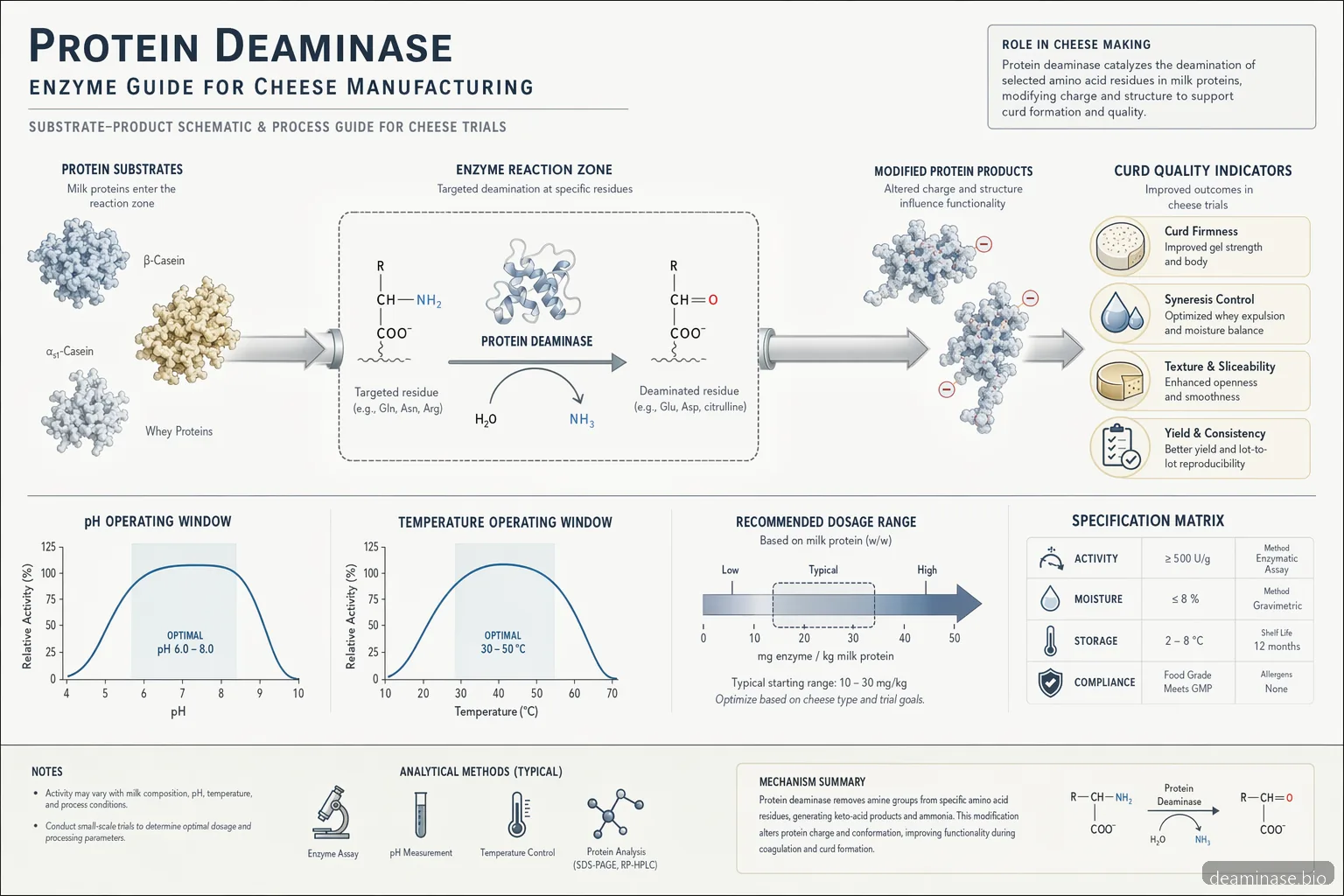
Supplier documents and specification review
When selecting a deaminase enzyme supplier for cheese, request a complete technical and quality package before purchasing commercial volumes. The COA should show lot number, activity, appearance, microbiological limits, moisture or solids where relevant, and release date. The TDS should define substrate, activity assay, recommended pH and temperature ranges, storage, shelf life, handling, and inactivation information. The SDS should cover safe industrial handling, dust control, personal protective equipment, spill response, and transport classification. Buyers should also request allergen information, production organism or source category where disclosed, carrier composition, food-use suitability statement, and country-of-origin details. Do not rely only on product names, because activity units, formulation strength, carriers, and thermal stability can vary significantly between suppliers.
Request COA, TDS, SDS, allergen statement, and origin information • Compare activity methods before comparing price per kilogram • Confirm carrier ingredients and compatibility with label requirements • Check recommended storage temperature and opened-package handling
Pilot validation for cheese manufacturing
A strong protein glutaminase supplier for cheese should support pilot validation with realistic plant conditions, not only bench-top beaker tests. Build the trial around the intended cheese format: natural cheese, processed cheese, spreadable cheese, analog cheese, or plant-dairy blended cheese. Define the control formula, enzyme-treated formula, and at least two dosage points. Monitor pH, soluble nitrogen, degree of deamidation if available, viscosity, moisture, fat retention, protein recovery, melt profile, sliceability, shred performance, and sensory notes after storage. For natural cheese, include starter culture behavior, coagulation time, curd cut firmness, syneresis, salt uptake, and ripening observations. For processed cheese, measure hot viscosity, emulsion stability, oiling-off, firmness, and reheating performance. Results should be judged against a commercial acceptance range, not a single laboratory metric.
Use the same milk solids, salts, heat treatment, and equipment planned for production • Include untreated control and multiple dosage points • Evaluate fresh and stored cheese, because texture can shift over time
Cost-in-use and procurement comparison
Procurement teams often compare enzyme prices per kilogram, but cost-in-use is the better metric. A concentrated product with higher verified activity may cost more per kilogram and still be cheaper per ton of cheese if dosage is lower or reaction time is shorter. Calculate cost based on enzyme activity delivered per gram of protein, process holding time, tank occupancy, heating or cooling requirements, yield change, rework reduction, and any added testing. Include hidden costs such as cold-chain storage, minimum order quantity, shelf-life risk, customs clearance, and waste from partially used containers. For a deaminase enzyme supplier for dairy, the commercial discussion should include sample availability, lead time, batch-to-batch consistency, technical response time, and whether the supplier can support troubleshooting during scale-up.
Compare cost per ton of finished cheese, not only price per kilogram • Include holding time, yield impact, and enzyme inactivation costs • Ask about sample size, MOQ, lead time, and lot reservation options
Beyond cheese: plant protein and noodles
Many buyers that start with deaminase enzyme for cheese later evaluate the same protein modification approach in adjacent categories. A deaminase enzyme supplier for plant protein may support soy, pea, wheat, rice, or mixed protein systems where hydration, dispersion, viscosity, or emulsification are limiting factors. A protein deaminase supplier for plant protein should recommend trials based on protein isolate quality, heat history, pH, salt level, and off-flavor control. A deaminase enzyme supplier for noodles may focus on wheat protein functionality, dough handling, bite, elasticity, and cooking loss, but conditions must be validated because excessive modification can weaken structure. Cross-application experience is useful, yet cheese remains its own matrix because casein, whey protein, calcium, fat, cultures, and salts create different performance constraints.
Related applications include dairy ingredients, plant protein, and noodles • Do not transfer dosage from one matrix without new validation • Supplier application support should be specific to the target formulation
Technical Buying Checklist
Buyer Questions
In many food protein modification discussions, protein deaminase and protein glutaminase are used to describe enzymes that deamidate glutamine residues in proteins, forming glutamic acid residues. Buyers should not assume all products are equivalent. Compare the supplier’s activity assay, substrate specificity, formulation, pH and temperature range, and food-use documentation before selecting a protein glutaminase supplier for cheese.
It may be possible in some systems, but direct addition should be validated cautiously. Enzyme treatment can affect casein interactions, coagulation time, curd firmness, whey losses, and culture behavior. Many processors first test treatment of a dairy protein ingredient or standardized milk stream, followed by controlled inactivation, before evaluating direct cheesemilk addition in a pilot cheese make.
A practical first screen is often 10 to 200 activity units per gram of protein, or about 0.02% to 0.30% enzyme preparation by protein weight if activity units are not yet comparable. The correct dose depends on enzyme strength, protein substrate, pH, temperature, holding time, and target cheese functionality. Always confirm the supplier’s TDS recommendations.
Key QC checks include pH, temperature, holding time, viscosity, soluble nitrogen, degree of deamidation if available, coagulation behavior, moisture, protein and fat recovery, texture, melt, oiling-off, sensory quality, and microbiology. For processed cheese, hot viscosity and emulsion stability are important. For natural cheese, curd firmness, syneresis, salt uptake, and ripening behavior should be monitored.
Compare suppliers by verified activity, assay method, lot consistency, recommended conditions, documentation quality, application support, sample availability, lead time, MOQ, storage requirements, and change notification practices. Price per kilogram is not enough. Calculate cost-in-use based on dosage per ton of finished cheese, process time, yield impact, and any additional heat-treatment or QC costs.
Protein-Glutaminase (Protein Deaminase) for Research & Industry
Need Protein-Glutaminase (Protein Deaminase) for your lab or production process?
ISO 9001 certified · Food-grade & research-grade · Ships to 80+ countries
Frequently Asked Questions
What is the difference between protein deaminase and protein glutaminase?
In many food protein modification discussions, protein deaminase and protein glutaminase are used to describe enzymes that deamidate glutamine residues in proteins, forming glutamic acid residues. Buyers should not assume all products are equivalent. Compare the supplier’s activity assay, substrate specificity, formulation, pH and temperature range, and food-use documentation before selecting a protein glutaminase supplier for cheese.
Can protein deaminase be added directly to cheesemilk?
It may be possible in some systems, but direct addition should be validated cautiously. Enzyme treatment can affect casein interactions, coagulation time, curd firmness, whey losses, and culture behavior. Many processors first test treatment of a dairy protein ingredient or standardized milk stream, followed by controlled inactivation, before evaluating direct cheesemilk addition in a pilot cheese make.
What dosage should we test for a cheese pilot?
A practical first screen is often 10 to 200 activity units per gram of protein, or about 0.02% to 0.30% enzyme preparation by protein weight if activity units are not yet comparable. The correct dose depends on enzyme strength, protein substrate, pH, temperature, holding time, and target cheese functionality. Always confirm the supplier’s TDS recommendations.
Which QC tests matter most for cheese applications?
Key QC checks include pH, temperature, holding time, viscosity, soluble nitrogen, degree of deamidation if available, coagulation behavior, moisture, protein and fat recovery, texture, melt, oiling-off, sensory quality, and microbiology. For processed cheese, hot viscosity and emulsion stability are important. For natural cheese, curd firmness, syneresis, salt uptake, and ripening behavior should be monitored.
How should we compare two deaminase enzyme suppliers?
Compare suppliers by verified activity, assay method, lot consistency, recommended conditions, documentation quality, application support, sample availability, lead time, MOQ, storage requirements, and change notification practices. Price per kilogram is not enough. Calculate cost-in-use based on dosage per ton of finished cheese, process time, yield impact, and any additional heat-treatment or QC costs.
Ready to source?
Turn This Guide Into a Supplier Brief Request a cheese-focused protein deaminase sample, COA/TDS/SDS package, and pilot trial discussion from deaminase.bio.
Contact Us to Contribute