Industrial Protein Deaminase for Cheese Processing
Optimize cheese texture, melt and yield with industrial protein deaminase. See dosing, pH, temperature, QC, COA/TDS/SDS and supplier checks.
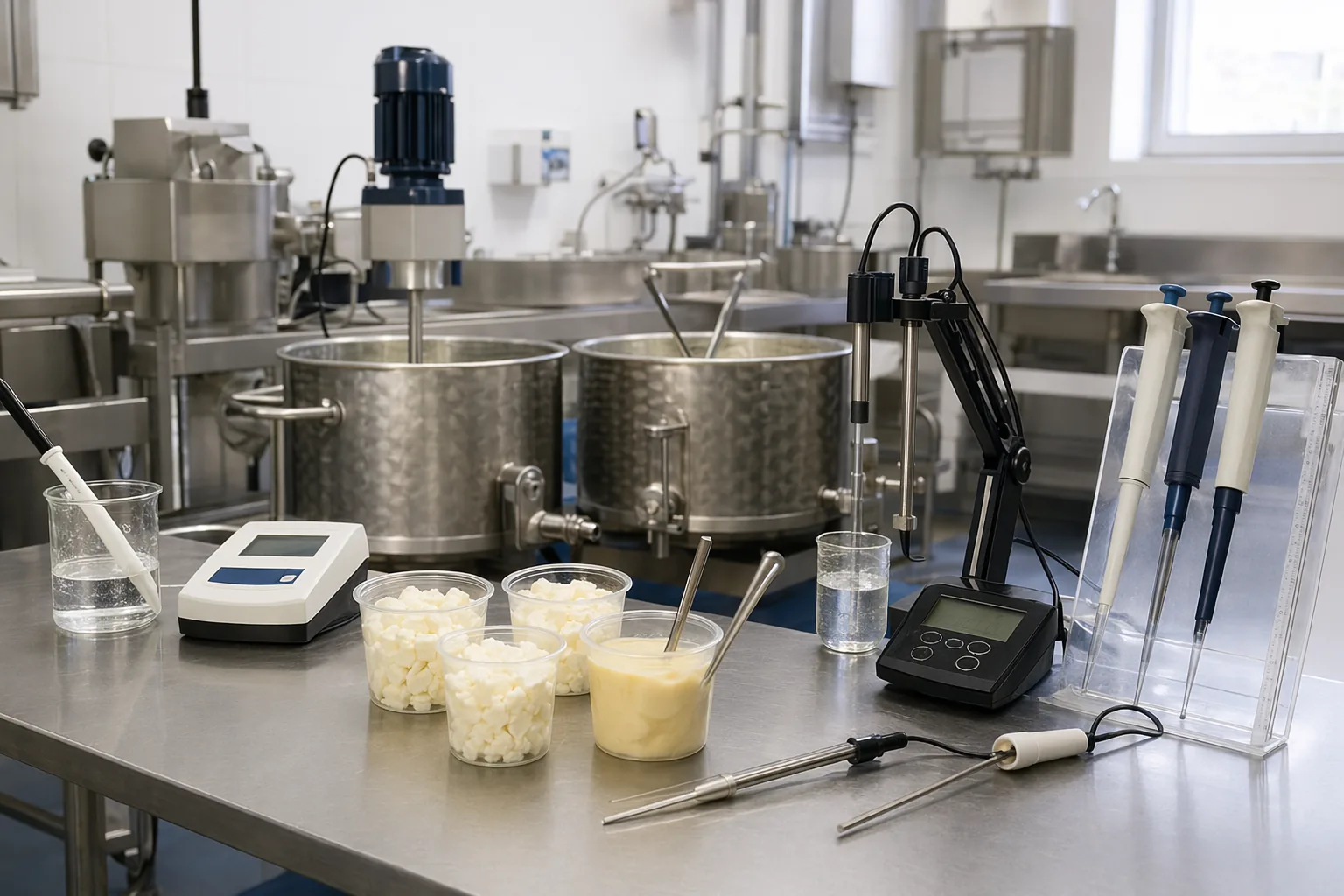
A practical B2B guide for cheese manufacturers evaluating protein deaminase or protein glutaminase to modify dairy and blended proteins for texture, melt, hydration and process consistency.
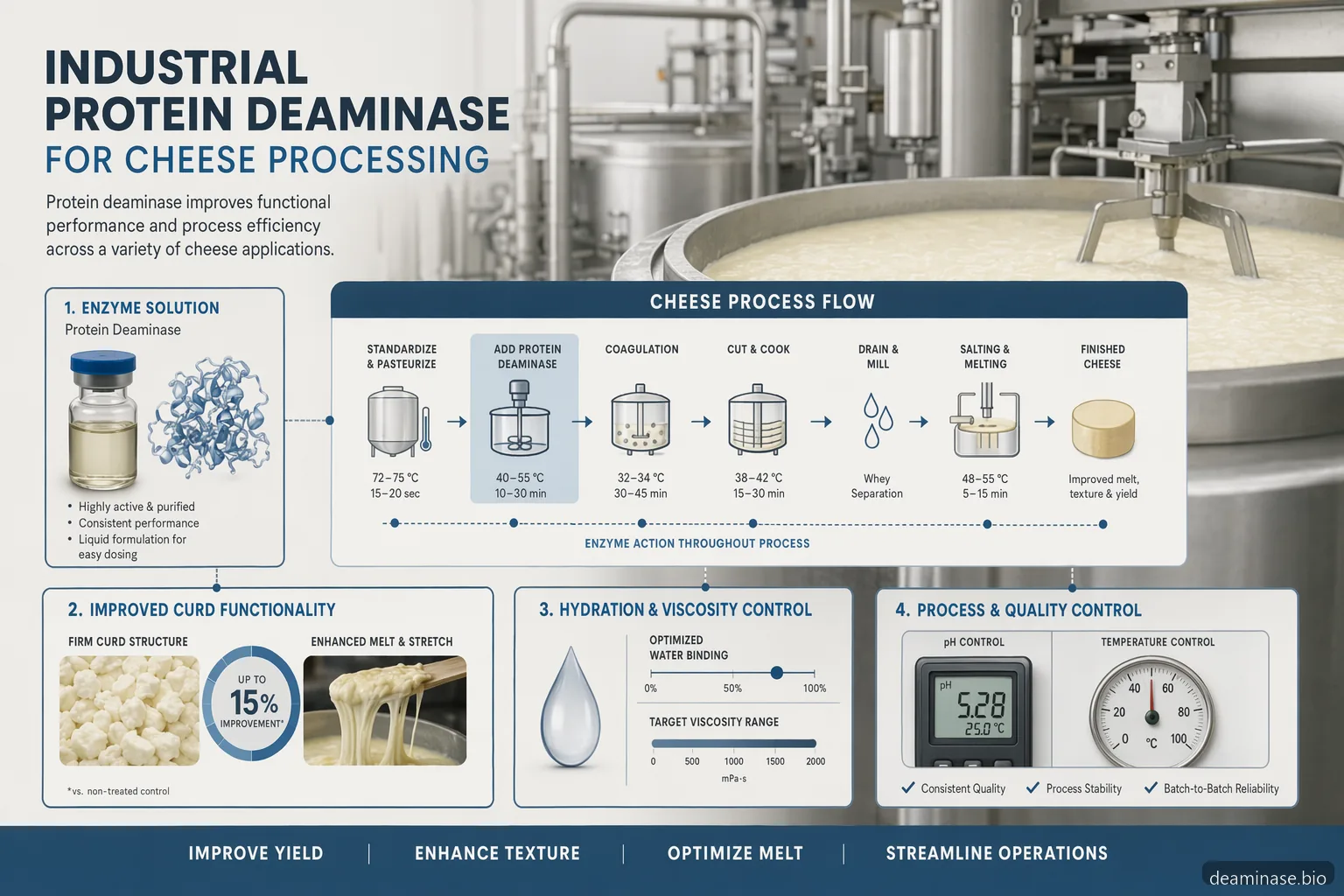
Why cheese processors evaluate protein deaminase
Protein deaminase, also called protein glutaminase in many industrial contexts, modifies glutamine residues in food proteins to form glutamic acid residues. This increases protein charge and can change hydration, dispersion, emulsification and heat behavior. For cheese producers, the value is not a generic enzyme claim; it is a process tool that may help tune curd performance, moisture control, melt profile or processed cheese texture. The application is especially relevant where dairy proteins are combined with whey protein, caseinate, plant protein or other functional protein systems. An industrial deaminase enzyme cheese project should define the target problem first: firmer slice, smoother melt, reduced graininess, improved water binding or better protein compatibility. The enzyme is then screened against the actual milk, curd, cheese base or protein blend used in production.
Useful for natural cheese trials, processed cheese systems and cheese analogues. • Most valuable where protein functionality limits texture or melt. • Requires validation against the specific recipe and heat process.
Process conditions for pilot cheese trials
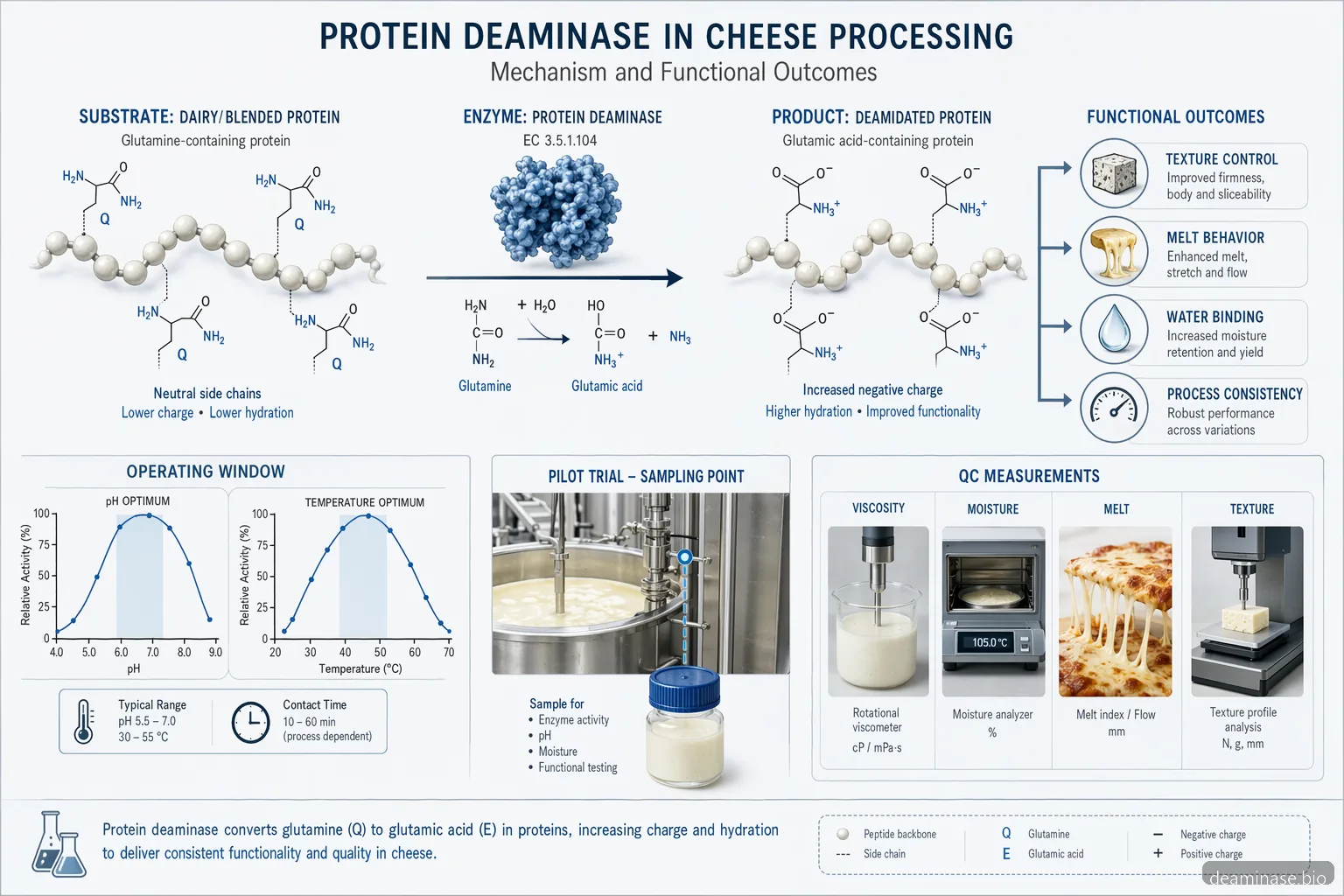
A practical pilot protocol for industrial protein deaminase cheese work usually begins with small, controlled batches. Common screening ranges are pH 5.5-7.5, 35-55°C and 30-120 minutes, but the final window must follow the enzyme TDS and the sensitivity of the cheese system. Dosage is often screened as a band rather than a single number, for example 10-100 U per gram of target protein or a supplier-recommended inclusion rate based on enzyme activity. In cheese milk, the enzyme may affect rennet coagulation, acid development and curd firmness, so reaction timing is critical. In processed cheese or cheese analogue systems, treatment may be applied to a protein slurry before emulsification and cooking. Include an untreated control, at least three dosage points and a heat-inactivated comparison where feasible.
Start with bench batches before pilot kettle or vat trials. • Track pH drift because deamidation can release ammonia. • Confirm enzyme inactivation during later heat treatment when required.
Application fit: dairy, plant protein and noodles
Although this page focuses on protein deaminase for cheese, many buyers also evaluate adjacent applications. Industrial protein deaminase dairy projects may target milk protein concentrates, whey ingredients or recombined dairy systems. Industrial protein deaminase plant protein trials may focus on soy, pea, wheat, faba or other proteins that need improved hydration or reduced aggregation before being used in cheese alternatives. In blended dairy-plant cheese, deamidation may help reduce incompatibility between protein phases, but it can also change viscosity and flavor release. Industrial protein deaminase noodles applications are different: the objective is often dough handling, bite or protein network adjustment rather than melt. For all applications, the same principle applies: match the enzyme to the substrate, reaction pH, temperature, water activity and downstream kill step.
Cheese trials should not assume the same dosage as plant protein beverages. • Plant proteins often require pre-hydration before enzyme treatment. • Noodle systems need separate dough and cooking quality tests.
Quality control and performance measurements
Successful industrial protein glutaminase cheese validation depends on measuring both enzyme reaction and finished product performance. Degree of deamidation can be monitored by ammonia release, nitrogen chemistry or an agreed analytical method from the supplier. Cheese process checks should include pH, titratable acidity, rennet coagulation time, curd firmness, whey losses, moisture, fat, protein and salt. Finished product checks depend on cheese type: texture profile analysis, sliceability, melt flow, oiling-off, stretch, viscosity, color and sensory review are common. Microbiological testing remains essential because enzyme treatment adds a holding step that may change time-temperature exposure. For processed cheese, also check cook stability and emulsion integrity. A result is commercially useful only when it improves the target attribute without harming yield, flavor, shelf life or line throughput.
Compare every trial against the current commercial process. • Measure both reaction progress and finished cheese performance. • Include sensory review before moving to larger trials.
Supplier qualification and cost-in-use
When selecting a protein deaminase supplier for cheese, request technical and quality documentation before production trials. A complete supplier package should include a current COA for the offered lot, TDS with activity definition and recommended use conditions, SDS, storage guidance, shelf-life information, carrier declaration and regulatory suitability for the intended market. Ask how activity is measured, because unit definitions can differ between suppliers and make price-per-kilogram comparisons misleading. Cost-in-use should be calculated from active dosage, reaction time, holding tank capacity, yield impact, scrap reduction, rework reduction and any extra heat or cooling requirement. Supplier qualification should also cover lot-to-lot consistency, traceability, change notification, lead time, sample availability and technical support during pilot validation. Do not rely on unsupported claims; require data generated in your matrix.
Compare suppliers by cost per functional result, not only price per kilogram. • Request pilot support and documentation before plant trials. • Confirm regulatory fit for each country where the cheese will be sold.
Technical Buying Checklist
Buyer Questions
In many food enzyme discussions, protein deaminase and protein glutaminase refer to enzymes used to deamidate glutamine residues in proteins. Buyers should confirm the exact enzyme identity, activity method and substrate specificity on the TDS. For industrial protein glutaminase cheese trials, the practical focus is whether the product modifies the target dairy or blended protein under your process conditions.
Do not begin with a single fixed dosage. Use a small design of experiments with an untreated control and at least three activity-based dosage levels. A practical screening band may be 10-100 U per gram of target protein or the supplier’s recommended equivalent. Evaluate reaction time, pH, temperature and finished cheese performance before estimating cost-in-use.
It may help in some formulas by changing protein charge, hydration and emulsification behavior, but melt response depends on cheese type, protein source, calcium balance, emulsifying salts, moisture, pH and heat history. For credible validation, measure melt flow, oiling-off, viscosity, stretch and sensory quality against the current production control. Avoid assuming a benefit without matrix-specific pilot data.
A qualified supplier should provide a COA for the lot, TDS, SDS, enzyme activity definition, recommended processing conditions, storage and shelf-life guidance, carrier information and regulatory support for your market. For industrial deaminase enzyme cheese use, also ask for pilot sample availability, change notification practices, traceability and technical support during scale-up.
The same enzyme type may be evaluated across cheese, plant protein and noodles, but process design will differ. Industrial deaminase enzyme plant protein trials often need pre-hydration and different pH control. Industrial protein deaminase noodles work focuses on dough behavior and cooked texture. Cheese trials must check coagulation, melt, moisture and flavor, so separate validation is required.
Protein-Glutaminase (Protein Deaminase) for Research & Industry
Need Protein-Glutaminase (Protein Deaminase) for your lab or production process?
ISO 9001 certified · Food-grade & research-grade · Ships to 80+ countries
Frequently Asked Questions
Is protein deaminase the same as protein glutaminase for cheese applications?
In many food enzyme discussions, protein deaminase and protein glutaminase refer to enzymes used to deamidate glutamine residues in proteins. Buyers should confirm the exact enzyme identity, activity method and substrate specificity on the TDS. For industrial protein glutaminase cheese trials, the practical focus is whether the product modifies the target dairy or blended protein under your process conditions.
What dosage should a cheese plant use in the first pilot trial?
Do not begin with a single fixed dosage. Use a small design of experiments with an untreated control and at least three activity-based dosage levels. A practical screening band may be 10-100 U per gram of target protein or the supplier’s recommended equivalent. Evaluate reaction time, pH, temperature and finished cheese performance before estimating cost-in-use.
Can industrial protein deaminase improve cheese melt?
It may help in some formulas by changing protein charge, hydration and emulsification behavior, but melt response depends on cheese type, protein source, calcium balance, emulsifying salts, moisture, pH and heat history. For credible validation, measure melt flow, oiling-off, viscosity, stretch and sensory quality against the current production control. Avoid assuming a benefit without matrix-specific pilot data.
What documents should a protein deaminase supplier provide?
A qualified supplier should provide a COA for the lot, TDS, SDS, enzyme activity definition, recommended processing conditions, storage and shelf-life guidance, carrier information and regulatory support for your market. For industrial deaminase enzyme cheese use, also ask for pilot sample availability, change notification practices, traceability and technical support during scale-up.
Can the same enzyme be used for cheese, plant protein and noodles?
The same enzyme type may be evaluated across cheese, plant protein and noodles, but process design will differ. Industrial deaminase enzyme plant protein trials often need pre-hydration and different pH control. Industrial protein deaminase noodles work focuses on dough behavior and cooked texture. Cheese trials must check coagulation, melt, moisture and flavor, so separate validation is required.
Related: Protein Deamination for Better Food Functionality
Turn This Guide Into a Supplier Brief Request a protein deaminase sample, COA/TDS/SDS package and pilot trial guidance for your cheese process. See our application page for Protein Deamination for Better Food Functionality at /applications/protein-deamination-applications/ for specs, MOQ, and a free 50 g sample.
Contact Us to Contribute