Industrial Protein Glutaminase Cheese: Formulation Guide
Formulate cheese with industrial protein glutaminase: dosage, pH, temperature, QC, pilot validation, and supplier qualification.
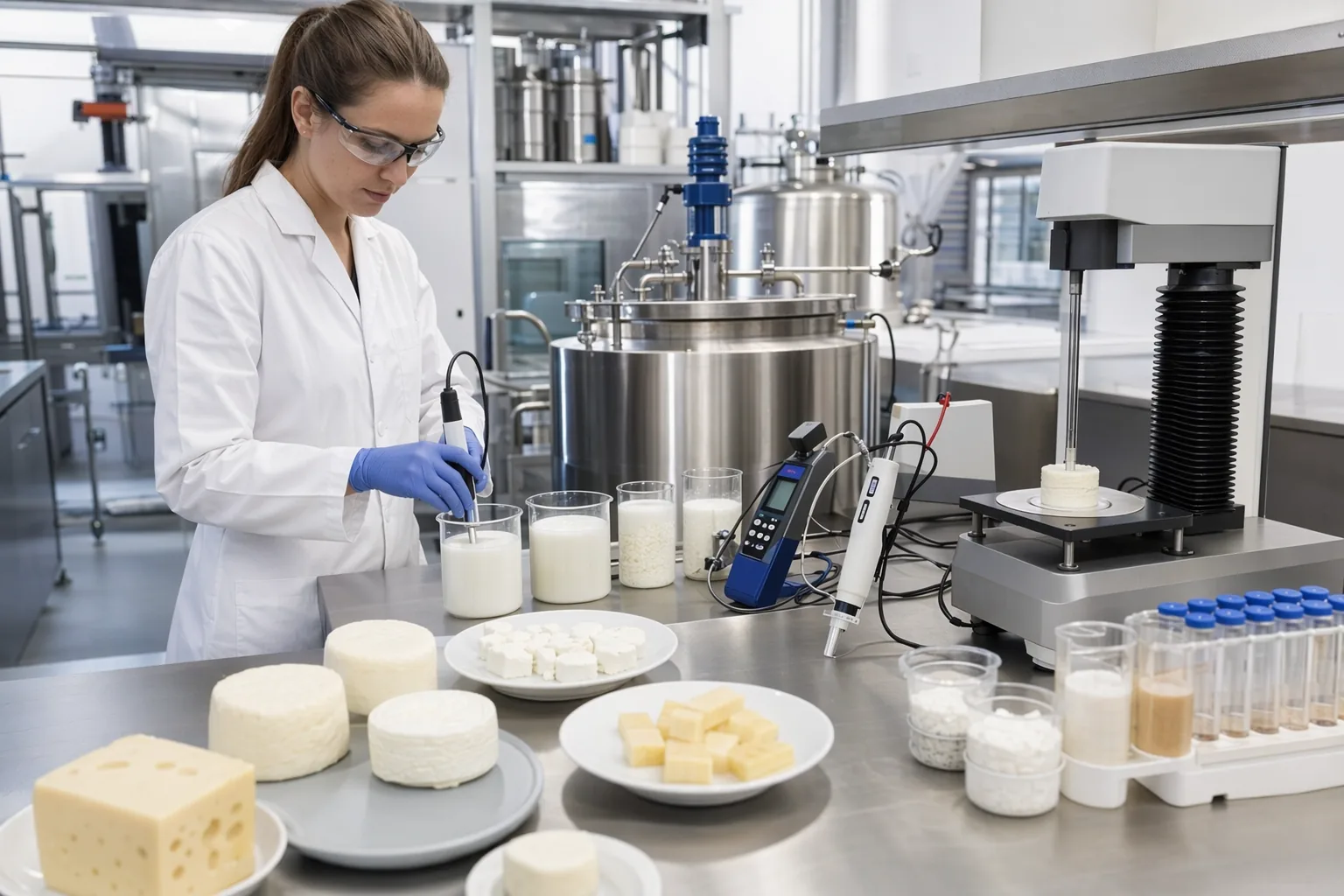
A practical B2B guide for using protein deaminase to modify dairy proteins, improve cheese process performance, and validate cost-in-use before scale-up.
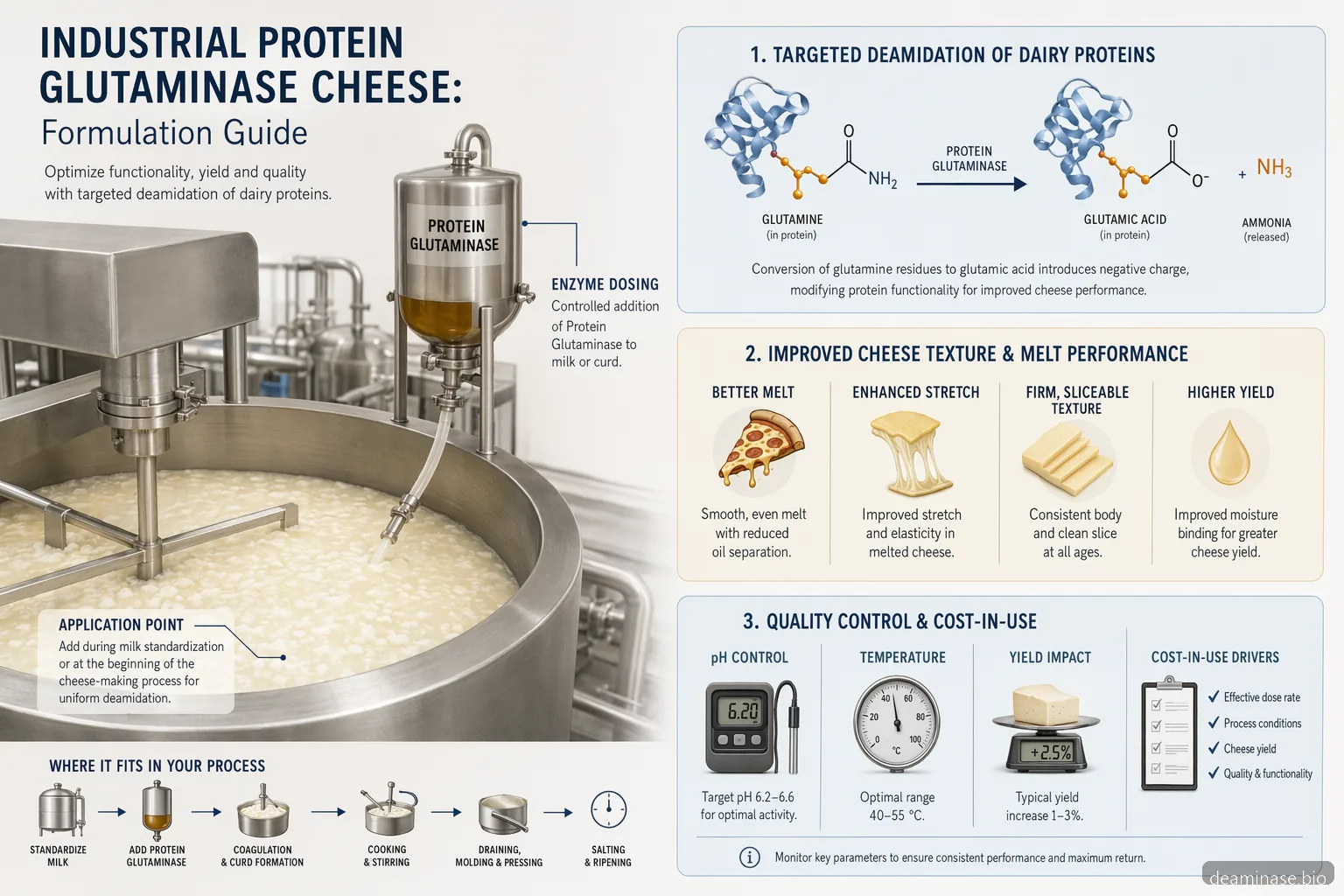
Why Use Protein Glutaminase in Cheese Formulations
Industrial protein glutaminase cheese applications focus on controlled deamidation of dairy proteins. The enzyme converts protein-bound glutamine residues to glutamic acid residues, increasing negative charge and changing hydration, dispersion, and protein-protein interactions. In cheese development, this can help formulators tune melt, moisture retention, emulsification, and curd behavior, depending on the milk system and make procedure. Unlike proteases, protein glutaminase is not primarily used to hydrolyze peptide chains, so it can modify functionality while limiting excessive bitterness or loss of structure when properly dosed. Results are formulation-specific, especially in rennet-set, acid-set, processed, and analogue cheese formats. Buyers evaluating a protein glutaminase supplier for cheese should test the enzyme in the actual milk, concentrate, casein, whey, fat, salt, and stabilizer matrix used in production.
Best fit: formulation trials where dairy protein functionality is the target. • Useful in natural, processed, spreadable, and analogue cheese development. • Performance depends on substrate protein type, pH, heat history, and salt.
Recommended Process Window for Pilot Trials
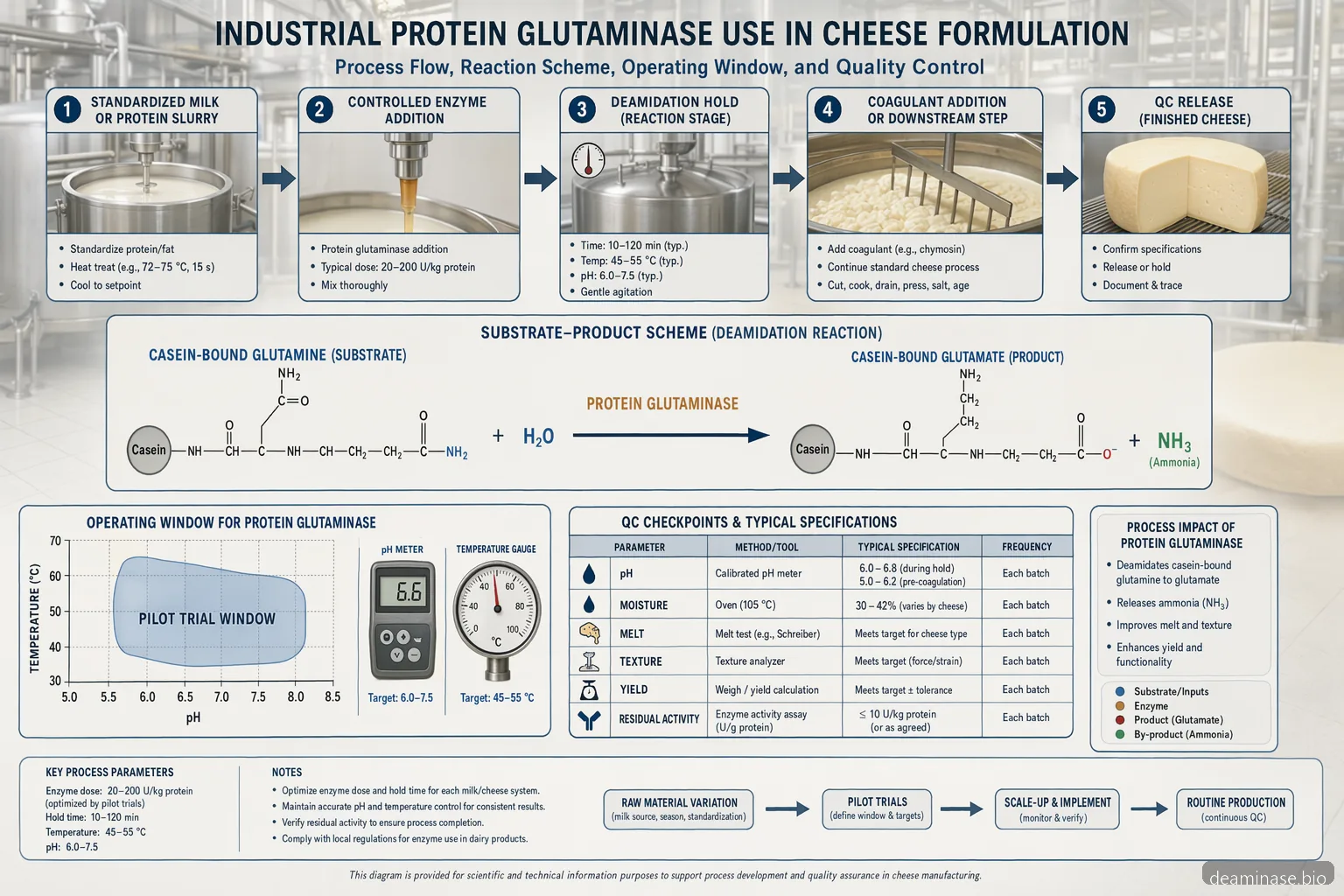
A safe development approach is to begin with bench-scale screening, then repeat the best conditions in a pilot vat. Many industrial protein glutaminase dairy trials start near the native milk pH range, typically pH 6.4-6.8, before renneting or acidification. Broader screening can include pH 5.5-7.2 if the cheese type permits. Temperature is often evaluated from 30-55°C, with 40-50°C useful for faster reaction screening and 30-35°C relevant to cheese make conditions. Incubation times of 30-180 minutes are common starting points. Dosage should be set by declared enzyme activity, often screened across low, medium, and high levels such as 10-100 U per gram of protein, or a supplier-recommended percentage addition. Always verify that treatment does not delay coagulation, weaken curd, or create unwanted flavor.
Start with supplier TDS dosage, then bracket lower and higher levels. • Control pH drift and temperature during incubation. • Include an untreated control and a heat-inactivated enzyme control where practical.
Where to Add the Deaminase Enzyme in a Cheese Process
For industrial protein deaminase cheese work, addition point should match the manufacturing objective. In many trials, protein glutaminase for cheese is added to milk, standardized milk, milk protein concentrate slurry, or a dairy-protein premix before rennet, culture acidification, emulsifying salts, or final cooking. Pre-treatment allows time for protein modification before the curd structure is formed. In processed cheese or cheese analogue systems, the enzyme may be evaluated in a hydrated protein phase before heating and blending with fat, salts, and flavors. If the process includes a later pasteurization or cook step, validate whether it reduces residual enzyme activity. If no kill step is present, confirm residual activity, labeling requirements, and shelf-life behavior with regulatory and quality teams.
Pre-rennet milk treatment can affect curd firmness and whey separation. • Premix treatment is useful for casein, whey, and milk protein concentrates. • Thermal inactivation must be validated in the real product matrix.
QC Checks That Matter for Cheese Manufacturers
Quality control should connect enzyme treatment to measurable cheese performance. At intake, review the COA for activity, microbiological limits, heavy metals if specified, appearance, carrier composition, and expiry date. During trials, monitor pH, temperature, time, protein content, and enzyme lot number. Analytical checks may include degree of deamidation, ammonia release, soluble nitrogen, viscosity, particle hydration, and coagulation time. Finished cheese evaluation should include moisture, fat, protein, salt, pH, water activity where relevant, yield, melt, stretch, firmness, sliceability, oiling-off, syneresis, and sensory review. Because deamidation can alter buffering and mineral interactions, compare treated and untreated batches through the full shelf life. A protein glutaminase supplier for cheese should support an activity method and practical sampling plan.
Track enzyme activity units, not only addition weight. • Measure rennet coagulation and curd firmness when used pre-rennet. • Run shelf-life checks on texture, melt, flavor, and package stability.
Cost-in-Use and Supplier Qualification
Cost-in-use is not the drum price of the enzyme; it is the cost per tonne of finished cheese at the validated dose, adjusted for yield, rework, process time, and quality impact. Ask potential suppliers for COA, TDS, SDS, allergen statement, country of origin, storage conditions, shelf life, enzyme activity definition, recommended handling, and lot traceability. Avoid relying on a single lab result; run multiple lots if the application is commercially important. A qualified protein glutaminase supplier for cheese should help interpret activity units, provide documentation for food use, and support pilot validation without overstating outcomes. Buyers that also manufacture industrial protein glutaminase plant protein, industrial protein glutaminase noodles, or other dairy systems should confirm whether the same grade and carrier are suitable across applications.
Compare cost per kilogram of protein treated and per tonne of cheese. • Confirm cold-chain or ambient storage requirements. • Evaluate supplier responsiveness, documentation quality, and lot consistency.
Technical Buying Checklist
Buyer Questions
In food formulation discussions, protein glutaminase is often described as a protein deaminase because it removes amide groups from protein-bound glutamine residues. For purchasing and regulatory review, use the supplier’s exact enzyme name, activity definition, and documentation. In cheese, the practical goal is targeted dairy protein modification, not medical or nutritional supplementation.
Most cheese trials add the enzyme before curd formation, either to standardized milk, a milk protein concentrate slurry, or a hydrated dairy-protein premix. This gives the enzyme time to modify proteins before rennet, acidification, cooking, or emulsification fixes the structure. The best addition point depends on the cheese type, heat steps, available hold time, and desired texture.
Start with the supplier’s TDS recommendation because activity units vary by producer and method. For screening, many formulators bracket low, medium, and high levels around the recommendation, such as 10-100 U per gram of protein when activity is stated that way. Evaluate coagulation, yield, texture, melt, flavor, and cost-in-use before selecting a production dose.
Some grades may be suitable for industrial protein glutaminase plant protein or industrial protein glutaminase noodles, but performance and regulatory fit should not be assumed. Plant proteins, wheat systems, and dairy proteins differ in substrate accessibility, pH, salt, hydration, and heat history. Ask whether the supplier supports those matrices and whether the same carrier and activity method apply.
Before approval, request COA, TDS, SDS, allergen information, enzyme activity method, shelf-life data, storage requirements, and lot traceability. Confirm food-use suitability and review any country-specific regulatory obligations with your internal team. Run pilot trials with at least one commercial lot, compare treated and untreated cheese, and calculate cost-in-use rather than choosing by enzyme price alone.
Protein-Glutaminase (Protein Deaminase) for Research & Industry
Need Protein-Glutaminase (Protein Deaminase) for your lab or production process?
ISO 9001 certified · Food-grade & research-grade · Ships to 80+ countries
Frequently Asked Questions
Is protein glutaminase the same as protein deaminase for cheese?
In food formulation discussions, protein glutaminase is often described as a protein deaminase because it removes amide groups from protein-bound glutamine residues. For purchasing and regulatory review, use the supplier’s exact enzyme name, activity definition, and documentation. In cheese, the practical goal is targeted dairy protein modification, not medical or nutritional supplementation.
When should protein glutaminase be added in cheese making?
Most cheese trials add the enzyme before curd formation, either to standardized milk, a milk protein concentrate slurry, or a hydrated dairy-protein premix. This gives the enzyme time to modify proteins before rennet, acidification, cooking, or emulsification fixes the structure. The best addition point depends on the cheese type, heat steps, available hold time, and desired texture.
What dosage should a cheese plant start with?
Start with the supplier’s TDS recommendation because activity units vary by producer and method. For screening, many formulators bracket low, medium, and high levels around the recommendation, such as 10-100 U per gram of protein when activity is stated that way. Evaluate coagulation, yield, texture, melt, flavor, and cost-in-use before selecting a production dose.
Can the same enzyme be used in plant protein or noodles?
Some grades may be suitable for industrial protein glutaminase plant protein or industrial protein glutaminase noodles, but performance and regulatory fit should not be assumed. Plant proteins, wheat systems, and dairy proteins differ in substrate accessibility, pH, salt, hydration, and heat history. Ask whether the supplier supports those matrices and whether the same carrier and activity method apply.
What should be checked before approving a supplier?
Before approval, request COA, TDS, SDS, allergen information, enzyme activity method, shelf-life data, storage requirements, and lot traceability. Confirm food-use suitability and review any country-specific regulatory obligations with your internal team. Run pilot trials with at least one commercial lot, compare treated and untreated cheese, and calculate cost-in-use rather than choosing by enzyme price alone.
Related: Protein Deamination for Better Food Functionality
Turn This Guide Into a Supplier Brief Request a cheese formulation trial brief, documentation checklist, and cost-in-use discussion for industrial protein glutaminase. See our application page for Protein Deamination for Better Food Functionality at /applications/protein-deamination-applications/ for specs, MOQ, and a free 50 g sample.
Contact Us to Contribute