Protein Glutaminase Supplier for Cheese: Specification Checklist
Compare protein deaminase suppliers for cheese with specs, process ranges, QC, COA/TDS/SDS, pilot validation, and cost-in-use checks.
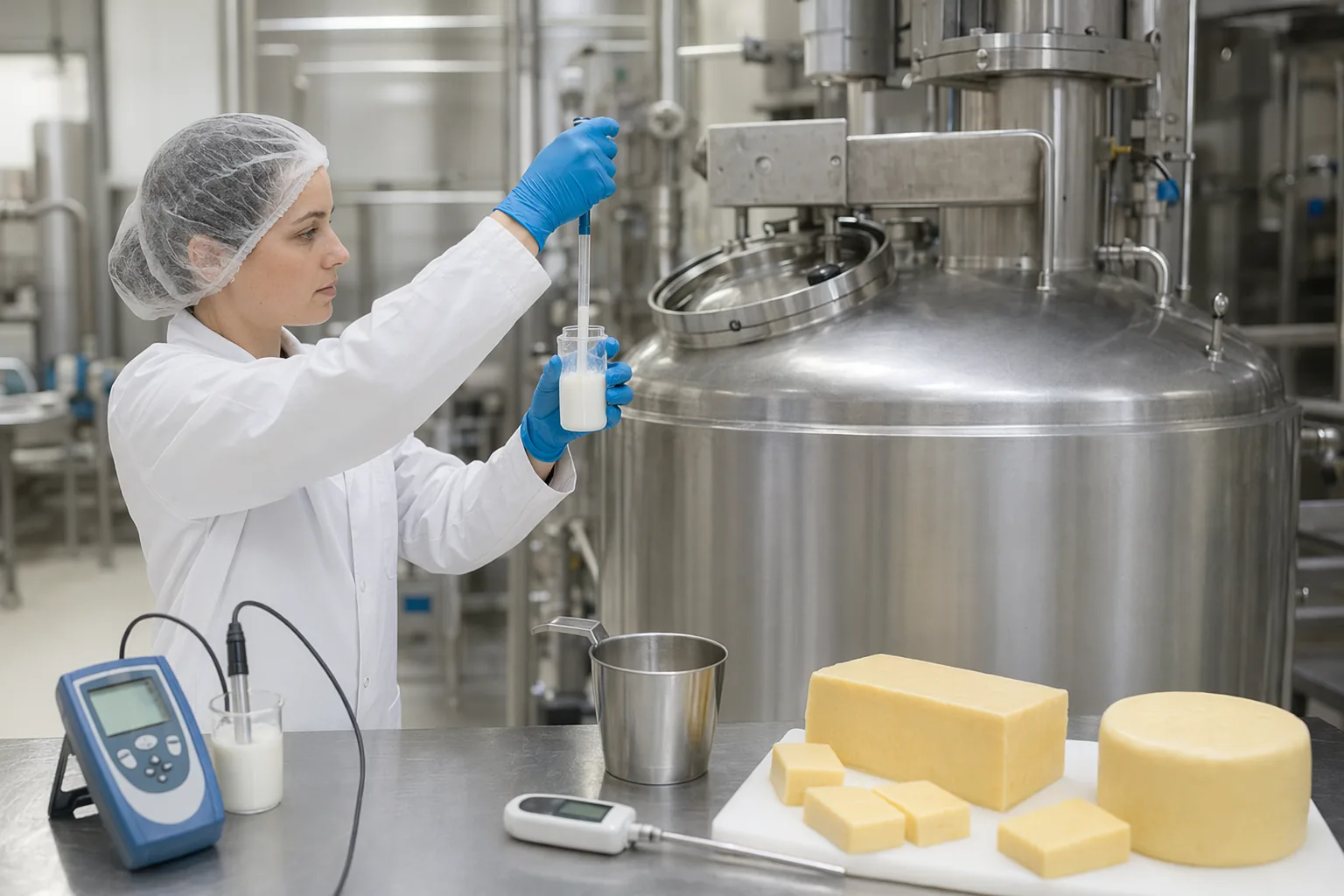
A practical B2B checklist for cheese manufacturers comparing protein glutaminase, also called protein deaminase, for controlled food protein modification.
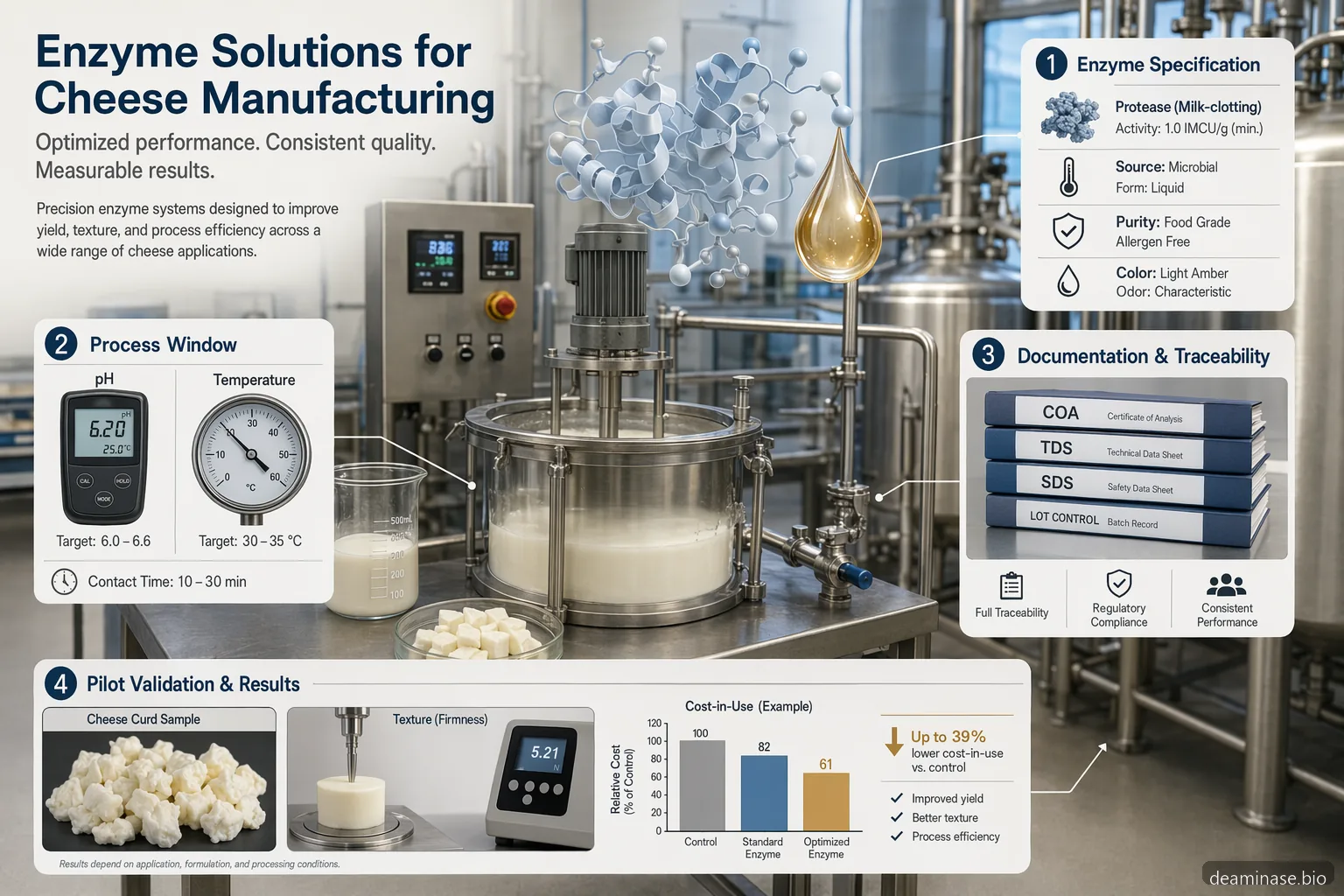
How to Compare a Protein Glutaminase Supplier for Cheese
A protein glutaminase supplier for cheese should be evaluated as a process partner, not only as an ingredient vendor. Protein glutaminase, often discussed alongside protein deaminase, modifies glutamine residues in food proteins and can change hydration, emulsification, viscosity, melt behavior, and protein dispersion. In cheese applications, the relevant question is whether those changes improve the target product under your milk system, starter culture, heat treatment, salt level, fat level, and make procedure. Ask each supplier for cheese-specific usage guidance rather than generic food enzyme claims. The strongest comparison includes enzyme activity definition, recommended dosage basis, carrier composition, processing window, inactivation guidance, documentation completeness, and responsiveness during pilot troubleshooting. For industrial protein glutaminase cheese projects, require side-by-side trials against a control and document both functional gains and any trade-offs in flavor, texture, whey handling, or downstream slicing and packaging.
Confirm the enzyme is positioned for food protein modification, not medical or supplement use. • Request cheese application notes with realistic dosage and contact time ranges. • Compare performance in your formula, not only in supplier demonstrations. • Check whether the supplier can support scale-up, sampling, and troubleshooting.
Process Conditions to Screen in Cheese Trials
Protein glutaminase for cheese is usually screened within the pH and temperature conditions where milk proteins remain processable and the enzyme retains useful activity. Many pilot programs begin around pH 5.5 to 7.0 and 35 to 55 °C, then narrow the window based on the supplier TDS and the cheese type. Dosage is commonly evaluated as a band, for example low, medium, and high additions expressed as units per gram of protein or grams of enzyme preparation per kilogram of protein-containing mix. Contact times may range from 15 to 120 minutes depending on substrate accessibility and process constraints. Because exact activity, formulation, and stability vary by supplier, do not transfer conditions blindly between products. Validate the enzyme before renneting, during milk protein standardization, or in processed cheese blends according to the intended manufacturing flow and legal requirements for the market.
Start with supplier-recommended pH, temperature, and dosage ranges. • Include a no-enzyme control and, where useful, a heat-inactivated enzyme control. • Track pH drift, viscosity, curd behavior, moisture, melt, and sensory notes. • Verify inactivation by heat or process removal where required.
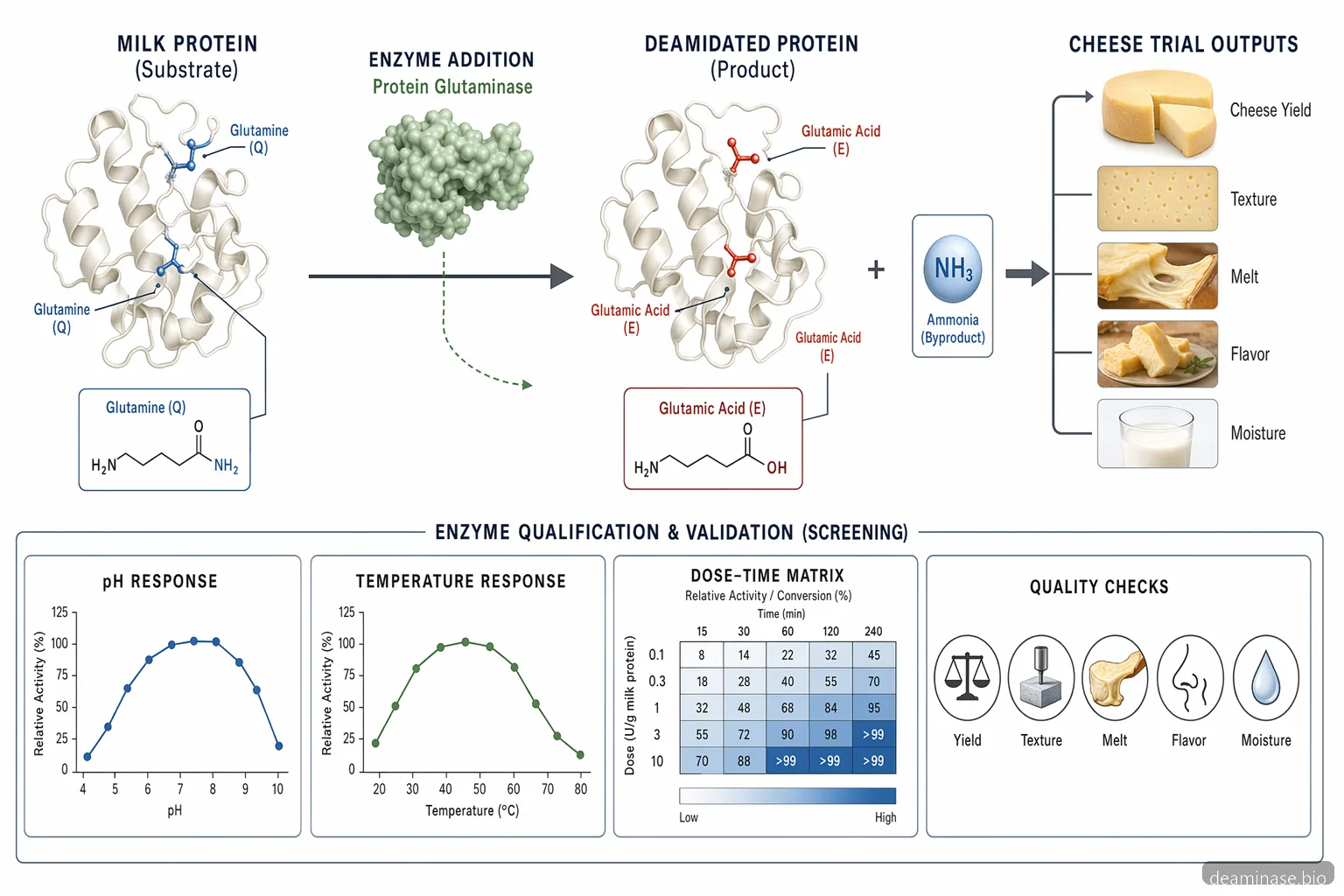
Documentation: COA, TDS, SDS, and Lot Control
Before qualifying a protein deaminase supplier for cheese, request the same documentation package you would require for other industrial food enzymes. The certificate of analysis should identify product name, lot number, activity result, test method reference, microbiological limits, physical form, and release date. The technical data sheet should describe enzyme function, typical application range, storage conditions, shelf life, handling precautions, and compatibility limitations. The safety data sheet should support safe receiving, storage, dust control, spill response, and worker protection. Buyers should also request ingredient composition, carrier or diluent information, allergen statement, GMO or fermentation-derived material statement where relevant, and regulatory suitability for the destination market. A credible supplier will avoid unsupported claims and explain how activity is measured. Lot-to-lot consistency is especially important when the cheese plant depends on narrow texture, melt, or slicing specifications.
Match the COA activity unit to the dosage calculation used in trials. • Confirm storage temperature, moisture protection, and shelf-life limits. • Review allergen and composition statements with your regulatory team. • Keep retained samples from trial and production lots.
Pilot Validation and Cheese Quality Checks
Pilot validation should convert supplier claims into measurable cheese plant data. Design trials around the finished product attribute that matters most: shreddability, melt, spreadability, emulsification, body, moisture retention, protein dispersion, or heat stability. For each trial, record milk or blend protein, fat, solids, pH, salt, calcium conditions, enzyme dose, temperature, contact time, agitation, and inactivation step. Quality control can include pH, moisture, fat, protein, salt, viscosity of the treated phase, curd firmness, yield calculation, melt test, oiling-off observation, texture profile, slice or shred performance, and sensory review. For processed cheese, monitor emulsification, hot viscosity, cooling curve, and final firmness. For natural cheese, confirm that curd formation, whey drainage, ripening behavior, and flavor development remain acceptable. Move to plant trials only after the pilot protocol demonstrates repeatability across at least two ingredient lots or milk seasons where possible.
Define pass-fail criteria before receiving samples. • Use analytical and sensory checks, not only operator impressions. • Document any effect on starter performance, rennet action, or emulsifying salts. • Repeat promising conditions before commercial approval.
Cost-in-Use and Supplier Qualification
The lowest quoted price rarely identifies the best protein glutaminase supplier for dairy or cheese production. Compare cost-in-use by calculating enzyme cost per metric ton of finished cheese, then include any changes in yield, rework, heating time, processing capacity, quality losses, waste, and inventory risk. A supplier with higher unit price may be preferable if the activity is consistent, dosage is lower, technical support is faster, or the product reduces rejected batches. Qualification should cover supply reliability, lead time, minimum order quantity, packaging size, cold-chain or dry storage needs, traceability, change notification, and complaint handling. If your company also needs a protein glutaminase supplier for plant protein or a protein glutaminase supplier for noodles, ask whether the same supplier can support separate application trials. Do not assume cheese conditions transfer to plant protein beverages, meat alternatives, noodles, or bakery systems.
Calculate cost per finished kilogram, not cost per kilogram of enzyme. • Ask for sample availability, lead times, and change-control practice. • Confirm technical support for scale-up and troubleshooting. • Separate cheese validation from plant protein and noodle validation.
Technical Buying Checklist
Buyer Questions
Ask for a COA, TDS, SDS, activity definition, recommended cheese dosage range, pH and temperature guidance, inactivation information, composition details, allergen statement, storage requirements, and shelf life. Also request sample availability and technical support for pilot trials. A supplier should explain how to calculate dosage on your protein basis and how to monitor functional effects in the intended cheese process.
The terms are sometimes used closely in commercial discussions, but buyers should verify the exact enzyme identity and reaction described by the supplier. Protein glutaminase generally refers to enzymatic deamidation of glutamine residues in proteins, changing protein charge and functionality. For purchasing and validation, rely on the supplier TDS, activity assay, regulatory documentation, and application data rather than name similarity alone.
There is no universal dosage because enzyme activity units, preparation strength, cheese type, protein concentration, pH, temperature, and contact time vary. A practical approach is to run a low, medium, and high pilot screen using the supplier recommendation, expressed as units per gram of protein or addition rate per batch. Confirm the best level through QC, sensory review, and cost-in-use calculation.
Some suppliers may offer technical support across dairy, plant protein, and noodle applications, but each matrix requires separate validation. Protein glutaminase for plant protein may focus on solubility or dispersion, while protein glutaminase for noodles may target dough handling or texture. Conditions from cheese should not be copied directly. Ask for application-specific guidance, samples, and documented pilot protocols.
Related Search Themes
protein glutaminase supplier for plant protein, protein glutaminase supplier for noodles, protein glutaminase supplier for dairy, protein glutaminase for cheese, protein deaminase supplier for cheese, industrial protein glutaminase cheese
Protein-Glutaminase (Protein Deaminase) for Research & Industry
Need Protein-Glutaminase (Protein Deaminase) for your lab or production process?
ISO 9001 certified · Food-grade & research-grade · Ships to 80+ countries
Frequently Asked Questions
What should I ask a protein glutaminase supplier for cheese before ordering?
Ask for a COA, TDS, SDS, activity definition, recommended cheese dosage range, pH and temperature guidance, inactivation information, composition details, allergen statement, storage requirements, and shelf life. Also request sample availability and technical support for pilot trials. A supplier should explain how to calculate dosage on your protein basis and how to monitor functional effects in the intended cheese process.
Is protein glutaminase the same as protein deaminase in cheese applications?
The terms are sometimes used closely in commercial discussions, but buyers should verify the exact enzyme identity and reaction described by the supplier. Protein glutaminase generally refers to enzymatic deamidation of glutamine residues in proteins, changing protein charge and functionality. For purchasing and validation, rely on the supplier TDS, activity assay, regulatory documentation, and application data rather than name similarity alone.
What dosage should be used for protein glutaminase for cheese?
There is no universal dosage because enzyme activity units, preparation strength, cheese type, protein concentration, pH, temperature, and contact time vary. A practical approach is to run a low, medium, and high pilot screen using the supplier recommendation, expressed as units per gram of protein or addition rate per batch. Confirm the best level through QC, sensory review, and cost-in-use calculation.
Can the same supplier support cheese, plant protein, and noodles?
Some suppliers may offer technical support across dairy, plant protein, and noodle applications, but each matrix requires separate validation. Protein glutaminase for plant protein may focus on solubility or dispersion, while protein glutaminase for noodles may target dough handling or texture. Conditions from cheese should not be copied directly. Ask for application-specific guidance, samples, and documented pilot protocols.
Related: Protein Deamination for Better Food Functionality
Turn This Guide Into a Supplier Brief Request a cheese-focused protein glutaminase specification review, sample plan, and pilot validation checklist from deaminase.bio. See our application page for Protein Deamination for Better Food Functionality at /applications/protein-deamination-applications/ for specs, MOQ, and a free 50 g sample.
Contact Us to Contribute